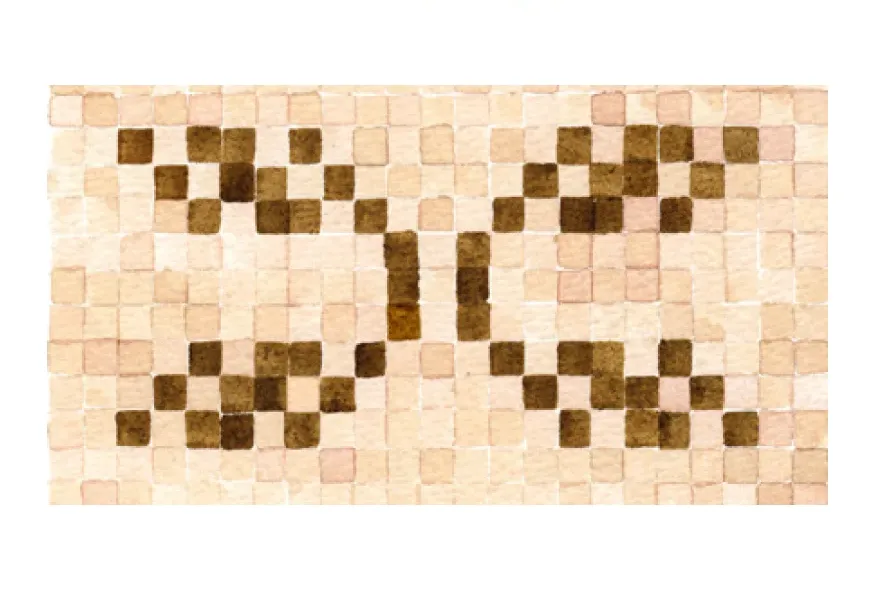
xʷop̓ ɛʔɛč means basket weave
xʷop̓ ɛʔɛč means basket weave. Once the base has been constructed, the sides of the basket are woven. This involves the use of many roots, and careful work to transition from one to the other. It also involves intentionally and carefully creating a beautiful pattern through integrating the use of other materials such as cherry bark. The weaving of the χa:p̓ represents all stages of the lifecourse, including the transitions between them. The core purpose can only be realized if all generations of Tla’amin qaymɩxʷ are meaningfully woven into the basket – without them all, the basket is incomplete.
Building up the Service Model from conception to death heals, strengthens, and supports individuals as they move through life. Importantly, it also supports our entire community – including future generations.ʔiʔ kʷaʔanəns q̓ ayɛmɩxʷ expresses the thought that when all the people in our community are well again, all around us will also be well. All rows need to be woven in their entirety in order for the basket to do its work.
“It all starts with respecting one another. Respect and love. Those are two important things for a family.”
Conception
While in the womb, we are connected with the world around us through our mother. Everything she hears, senses, and says comes to us through our connection with her, and this includes what others say and do around her. The wellness of the unborn baby requires that the mother and everyone around her is respectful and deliberate about their actions and words. This is important not only while the baby is in the womb, but it prepares them to be calm and well when they enter this world, too.
“My grandmother was like a midwife in Squirrel Cove where we’re from. She’d tell them the baby was in a breech position and massage them until the baby turned. My grandmother used to talk about the importance of massaging the mother while she’s pregnant. She used to talk about the mother’s wellbeing is just as important because the baby feels everything the mother feels. When I was pregnant, I could hear her tell my mother to find me something to do, because I was getting down. The women in the family took care of the pregnant women and helped keep them busy. It’s important to watch what we say around pregnant women because the baby in the womb hears everything. We have to watch what we say and what we do when we’re pregnant. Everything we see, hear, sense, smell while we’re pregnant moves to the unborn child. So the connection the mother and child have is more than we can see.”
“Taking care of the words that you say, taking care of your thoughts. Yes, even your thoughts come into play. And when you’re caring for children, all of these things come into play, even before the child is born.”
“Where I work, they do a few different ceremonies: within the year they celebrate a baby being born, making baby blankets.”
“We need to honour and respect what the woman goes through. Take care of her in a good way, then she can take care of her baby. That’s where a lot of the honouring the women’s ceremony comes in.”
Babies
Babies are precious, and at this stage of life we don’t place expectations on them; we let them know they are loved and that their needs will be met. During infancy, it is important to support the primary caregiver so that they are able to help the baby to feel secure and loved.
“You can say: ‘Can I hold your baby? You can go and have a coffee and I’ll be here.’ In a gentle way. Respecting the parent. Not making them feel like they’re overwhelmed by the situation.”
“Somebody taking the baby for a few minutes, give her a breather. Maybe the baby needs to be walked. All babies like to be walked.”
Toddlers
Toddlers may not have language to communicate their needs, so at this stage we work hard to understand what their behaviour is communicating. This sometimes requires a lot of patience and gentleness. At this stage, it continues to be important to provide consistency so they know where they belong, so supporting the primary caregiver is a continued priority.
“Young kids really pick up on feelings.”
“We don’t know the whole thing, but sometimes it’s hard for the child – they think granny and grandpa are not coming back. It’s a hard one. Maybe even leave them in short spurts – do it for an hour, and come back. Then two hours the next time. That way the child will relax, and know they’re coming back. Starting to feel comfortable. The grandparents and the child.”
“Being polite and being a decent human being goes a long way. You’re showing your kids by attitude and your love and care for them how they should grow up to be.”
Childhood
During childhood, we begin teaching children about how to relate with the world. This requires non-intrusive and proactive guidance and direction. We can respectfully support and redirect each other as adults in this process, as this is a difficult thing to do alone.
“Every child is different. One is quiet, the other is jumping up and down climbing trees.”
“Supporting the child means supporting the whole family.”
“It would be helpful to learn this stuff so I could teach it to my kids. Or if my kids learn about it and have questions, I’ll actually be able to answer instead of saying ‘I don’t know’.”
Youth
Youth are learning how to take on more and more responsibility. As they gain independence, ceremony and protocol can instill clarity and pride in who they are. Being particularly mindful of communicating with positive words while establishing expectations is important.
“I took youth on tribal journeys. I was trying to get them to learn how to be a community, to work together. If they feel comfortable they can start to heal stuff.”
“You’re still going to love your kid no matter what age they are, but as they get older they do need more responsibility. One or two chores throughout the week. How are they going to learn if they aren’t shown or taught? Every kid needs responsibility, otherwise they don’t learn responsibility.”
“It would be nice to bring back the stages of growth ceremonies. It makes the child feel loved, cared about, gives them direction, and gives a sense of why they are here and their responsibilities as a human being.”
Adults
As youth become adults, expectations for them to take responsibility and be accountable for their actions increase. Building them up through both gentle and firm guidance will support them to be strong as individuals, and for their family and community. Connection and joy are important, and depending on how they experienced earlier stages of life, they will need ongoing healing and learning.
“Even as an adult we’re learning every day. So if you don’t have access to somebody that’s teaching these things as a child, if you’re open to learning it then great – learn as an adult, or a teenager.”
Parent/Auntie/Uncle
Parents guide their children by modelling and teaching our values. This is not something parents do alone, but with the support of the čɛpθ9 and other trusted adults around them. Parents can reach out to others for support, and others can gently and respectfully step in and share this responsibility of raising children.
“If parents aren’t supported, kids become the parents. We need support for the supports – keep their cup filled up.”
“As a mom, when your kids stop listening to you, I go to someone else to tell them and they hear it. That’s why community and family is so important.”
“We need to be very aware of where we are at in life, and make the best call for the children because they’re innocent and they don’t necessarily have the words to speak up for themselves. Children don’t necessarily have the words to use to be able to say, ‘you’re not giving me 100%’. So, we have to do it for them. We need to be more aware of our own energy and the energy of anybody else we’re with.”
Grandparent
Traditionally, grandparents pass on knowledge to parents and grandparents in the context of daily life. Doing things together, sharing food, and telling stories, important teachings and values are passed down through generations. These connections bring joy and purpose to daily life for everyone involved.
“I try to instill sharing in my grandkids whenever we do something, like picking berries. We always share with the Elders that can’t get out and do it for themselves. When we distribute, my grandkids bring it to the door and hand it over. It’s nice to see them carry that on. It’s always been that way, long ago. Fish, deer meat, clams – you always share what you have. It’s a good feeling.”
“Back in the day, the kʷʋkʷpa, the čičyɛ, and the čɛpθ would look after the young ones. They were always around family. Even though the parents were hunting or fishing or gathering, the family was still intact because the grandparents had a responsibility with the kids. The old people would show you how to do things. They’d hold you and give you all that love.”
Elder
Elders, or old people, play a very important role in keeping and sharing knowledge.
They may or may not be grandparents, but through their experience and everything they’ve learned from those who came before them, they have a lot to offer the community. As such, Elders must be treated with respect, listened to carefully, and cared for.
“I learned some of the language from being around the Elders. We were always around them, so you picked up on things they said. I can’t speak it, but my kids and grandkids can.”
“I think of all the meetings that the Elders came and sat at the front of the room, and yeah – This is what the kids witness, as who they will be and what they will emulate. It’s so important.”
“Because I took every opportunity to sit with the old people, and hear their stories. That’s the thing. There was no discipline in our time. We were always told in story form. It came in a story.”
Death
The end of life is a time of transition for the person who has passed, and for everybody connected with them. This time is one of reverence, respect, and reflection. It teaches us a lot about how to live, and how to stay connected with our ancestors and their teachings.
“When you lose somebody in your family, it’s a new beginning without that loved one that you lost. And it’s a really powerful time, because we have to follow those teachings for one year. This year of firsts without them, they’re there with us. It’s a powerful time to focus on yourself and improve anything in your life that you want to improve because they’re going to be close with us for a while. All we have to do is ask and they’re going to be around us. We do our best for a year to focus on good things, to take a deep breath and not get mad. Because we can set a pattern for the rest of our lives if we’re not careful. We can get stuck in a rut at that time.”
Lifecourse teachings
The lifecourse teachings as presented here are about the connections that help us grow and develop. The wellness of the young ones is reliant on those who care for them, and caregivers need to be supported in order to do their jobs. This support comes from those who have learned through experience before them – grandparents and other Elders. Old people also need to be cared for and treated with respect because of the important role they play in the lifecourse cycle. It is by building intergenerational connections that the entire Service Model comes to life.
Importantly, lifecourse teachings are not age-dependent. We can begin learning – or start learning again – no matter how old or young we are. And, at every stage of the lifecourse we all have something to teach or contribute as well. Master weavers teach new weavers how to make a basket. The knowledge is carried forward through generational relationships so that the work can be done by new hands and Tla’amin ways are passed forward in perpetuity.
“One phrase that I love is ‘we lock arms for our children’. It’s a way of protecting and standing by our children. It could be one of the many things we think about when drafting and discussing things.”
“It takes a village to raise a child. When it comes to this kind of work: support and strengthen one another. Sometimes one of us is weaker, together we can get stronger.”
“It’s such a gentle way to correct a child. Instead of lecturing about what they’ve done, you tell about what mink did. It takes away from them feeling bad.”
“When my children were six and nine, and my father lived in our home. I asked my boys to put their toys away and get ready for a bath. They continued playing. Then their grandfather said, ‘excuse me, boys, I just heard your mother ask you to do something…you better get to it.’ They quickly jumped up and got ready for the tub. The way they responded to that grandparent voice was a big help to me. I noticed this when I used the traditional language, too. I only knew a few phrases but just as my boys responded quickly to their grandfather’s voice, they also did to their ancestral language. I could say, ‘let’s go sit down’, and they might linger. If I said, ‘kwaga hošt kʷanačɩm’, they came to the table.”