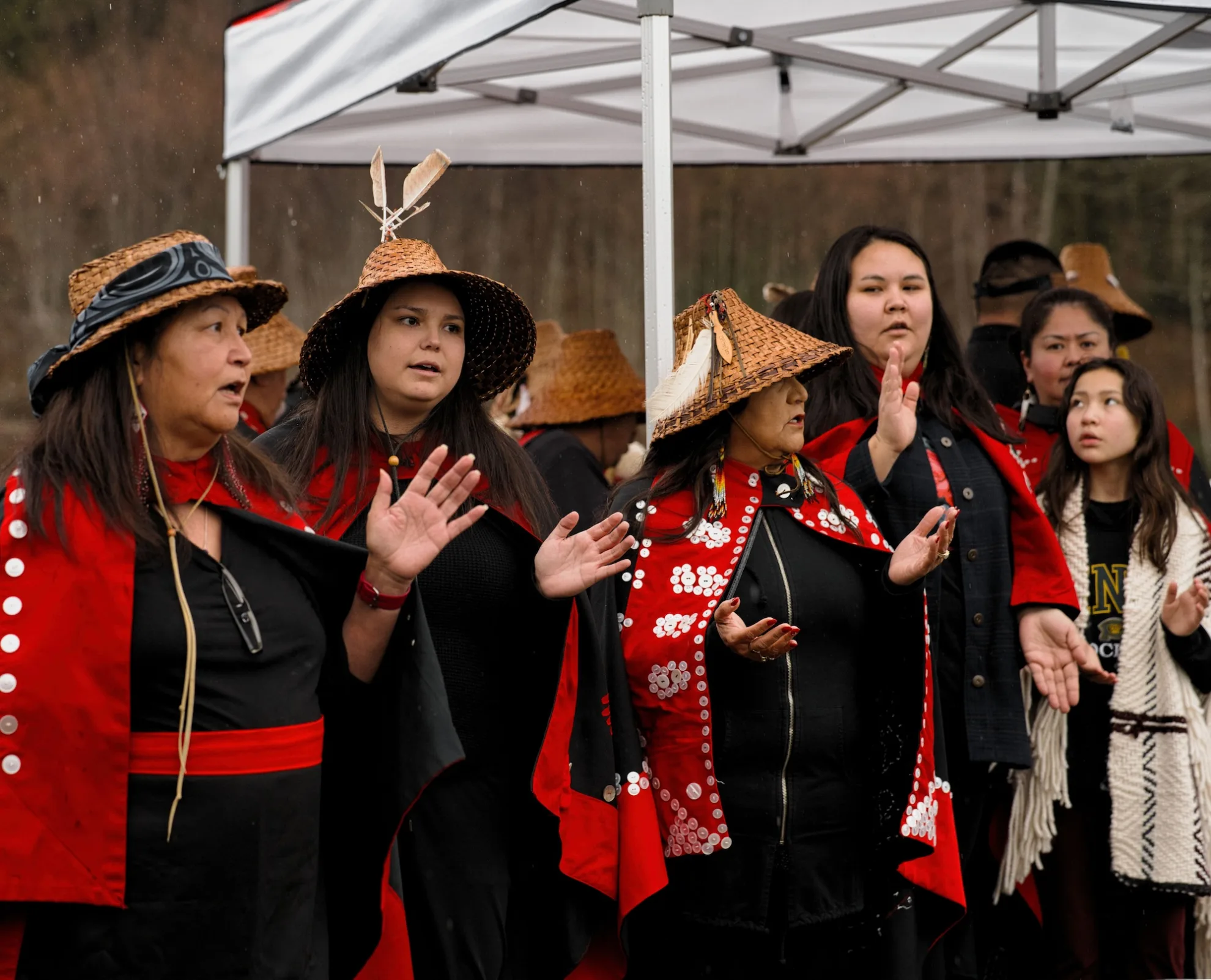
Tla’amin culture is grounded in ʔəms taʔəw, our teachings and laws. These teachings guide how we live, how we treat one another, and how we carry our responsibilities to the land, waters, and future generations.
ʔəms taʔəw
Our culture is not separate from governance, economy, or spirituality. All are woven together through relationship, accountability, and respect. Culture is lived every day through family life, ceremony, decision-making, and looking after one another.
Family, Kinship, and Responsibility
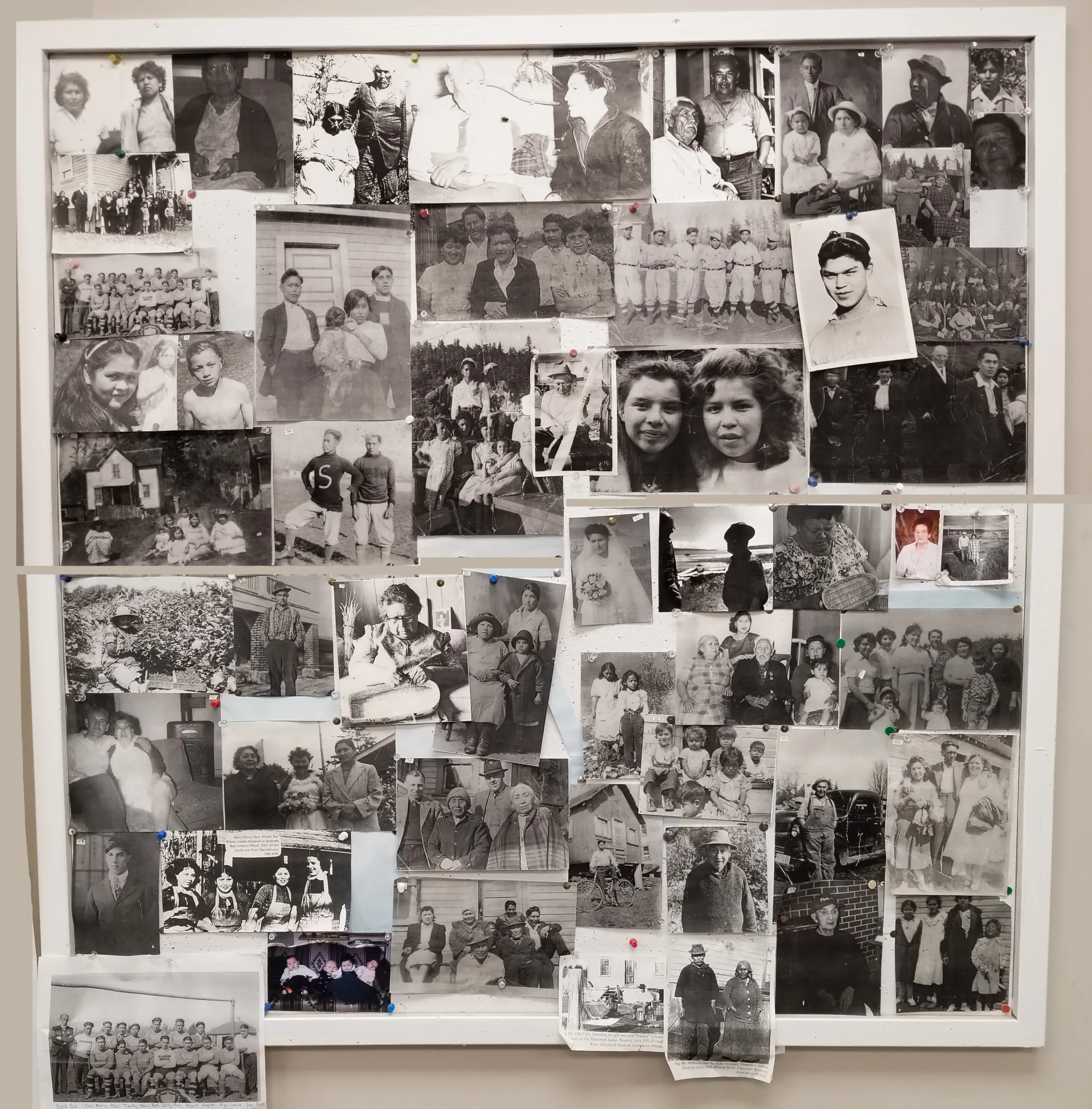
Tla’amin society is rooted in family and kinship. Identity, rights, and responsibilities flow through families rather than individuals alone.
Kinship connects people across villages and territories, allowing access to shared resources, mutual support, and collective look after the land and waters. Family ties guide naming practices, decision-making, and the transfer of knowledge across generations.
Generational Sharing
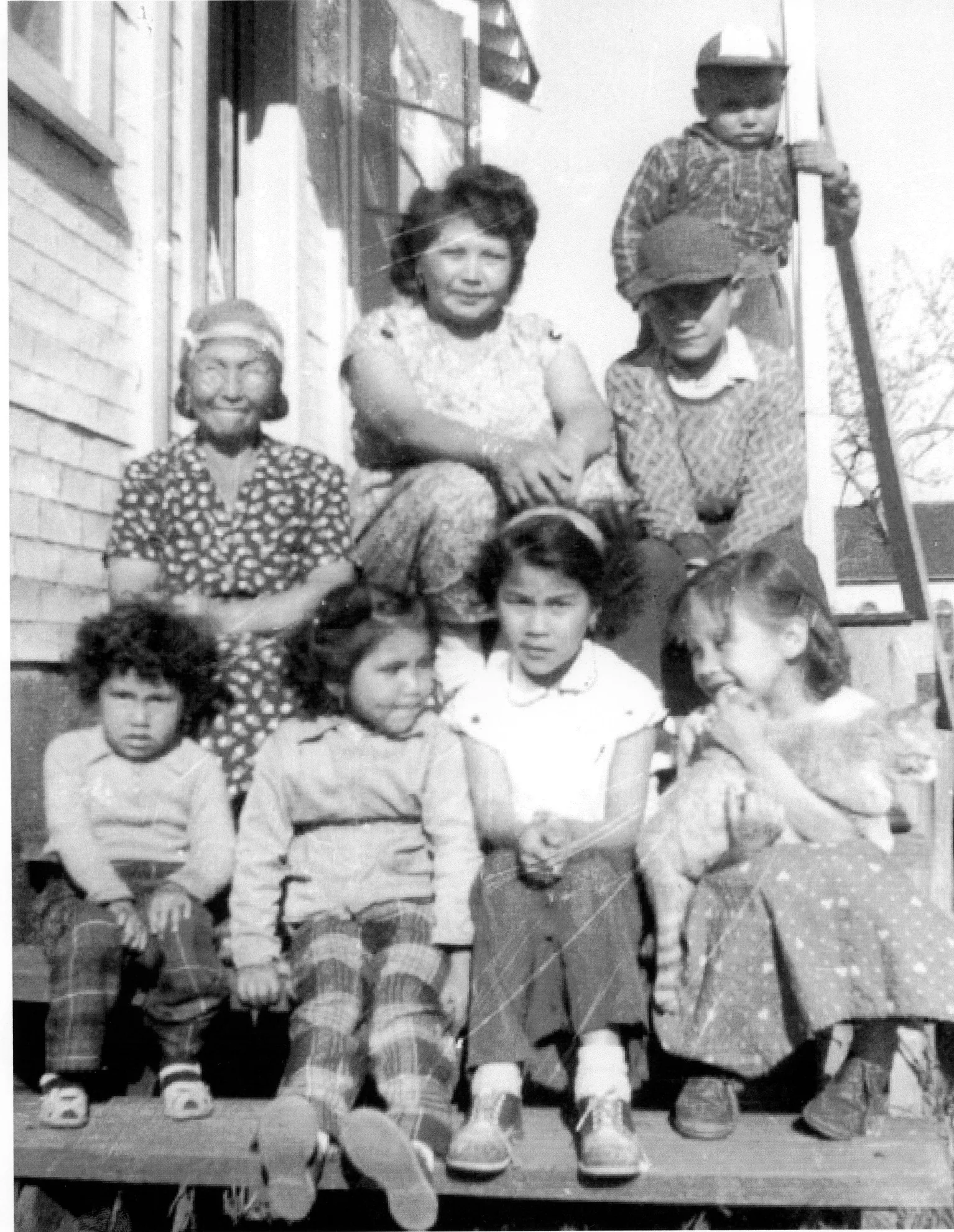
Our ƛaχƛaχay (Elders) are precious to us. They are the primary holders of knowledge, language, history, and teachings.
By listening to and learning from our Elders and by modelling the taʔəw in our behaviours and practices we carry ancestral knowledge forward into the present and future. Elders guide us not only through stories and instruction, but through example.
Our children are gifts from the Creator, and we honour them.
Tla’amin creation stories speak of how the Creator placed Tla’amin people on this land and bound us to it from the time of birth. This connection is honoured when families bury the moχʷaju (belly button or umbilical cord) of their newborns in a special place within the territory.
Through this practice and through daily teaching, children learn that they belong to the land and that the land belongs to them in responsibility, not ownership.
Ceremony and Cultural Life
Ceremony is a cornerstone of Tla’amin culture. Gatherings such as namings, memorials, and seasonal ceremonies are moments where teachings are passed on, responsibilities are affirmed, and relationships are renewed.
Ceremonies are not performances. They are part of Tla’amin governance. The way ceremonies are prepared for and conducted reflects respect for ancestors, witnesses, and future generations.
Land and Stewardship
Tla’amin culture is inseparable from ʔəms giǰɛ, our lands and waters.
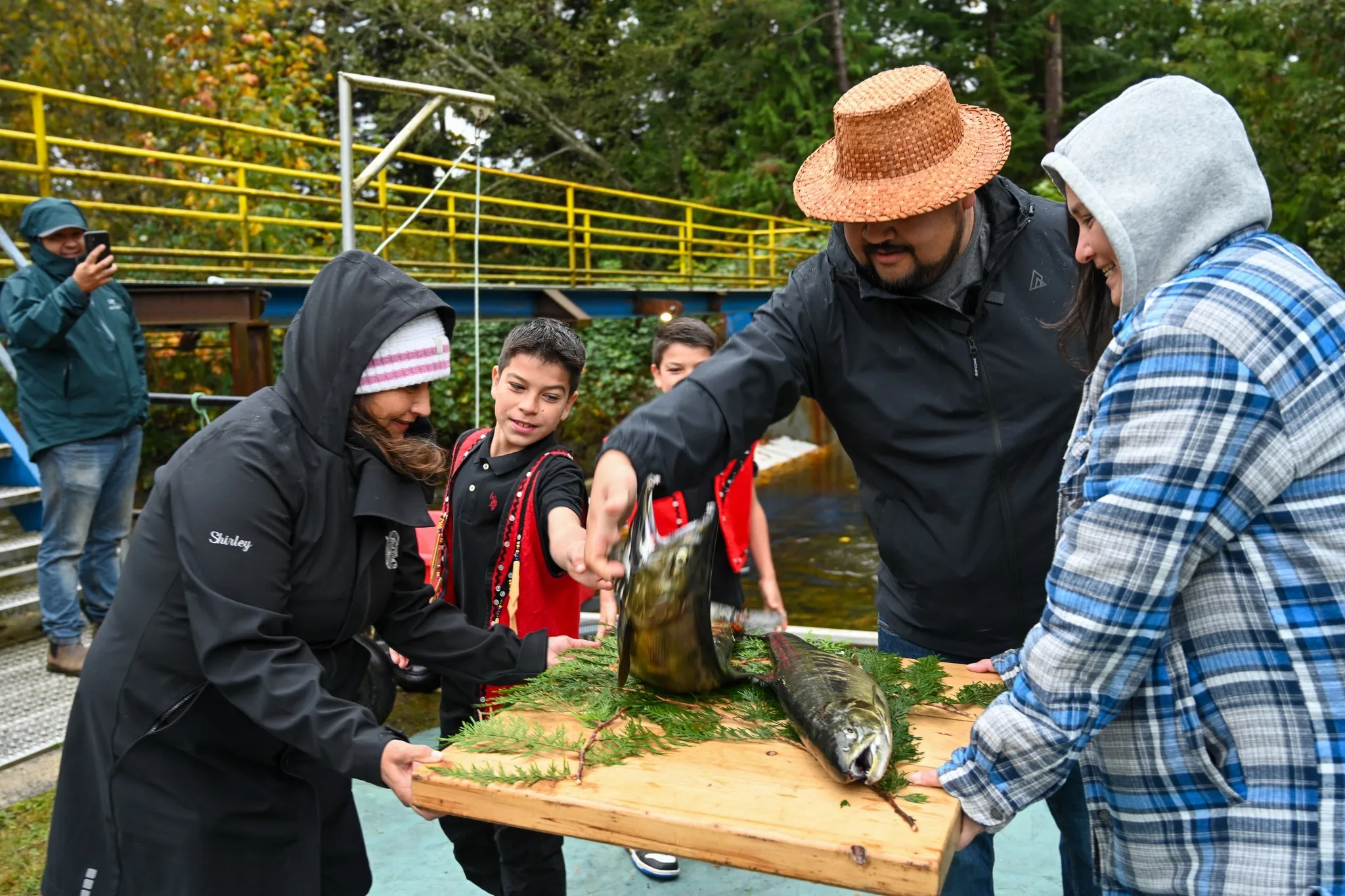
For thousands of years, Tla’amin people maintained an active presence across our territory through villages, harvesting sites, and travel routes. Our political, economic, and spiritual systems developed in direct relationship with the land, air, and waters.
Stewardship is a cultural responsibility. It means taking only what is needed, sharing resources, and ensuring abundance for those who come after us.
Ancestral Names
Ancestral names are a central part of Tla’amin cultural life. Names are held by families and passed down through generations according to lineage, readiness, and responsibility.
Receiving an ancestral name connects an individual directly to their ancestors and comes with obligations to live in a way that honours that name. Naming practices reinforce accountability, humility, and continuity across generations.
Living Culture
Tla’amin culture is not fixed in the past. It is living, evolving, and carried forward through action.
By practising ʔəms taʔəw, honouring our Elders, supporting our children, and upholding our responsibilities, we strengthen cultural continuity and ensure that Tla’amin ways of living remain strong for future generations.