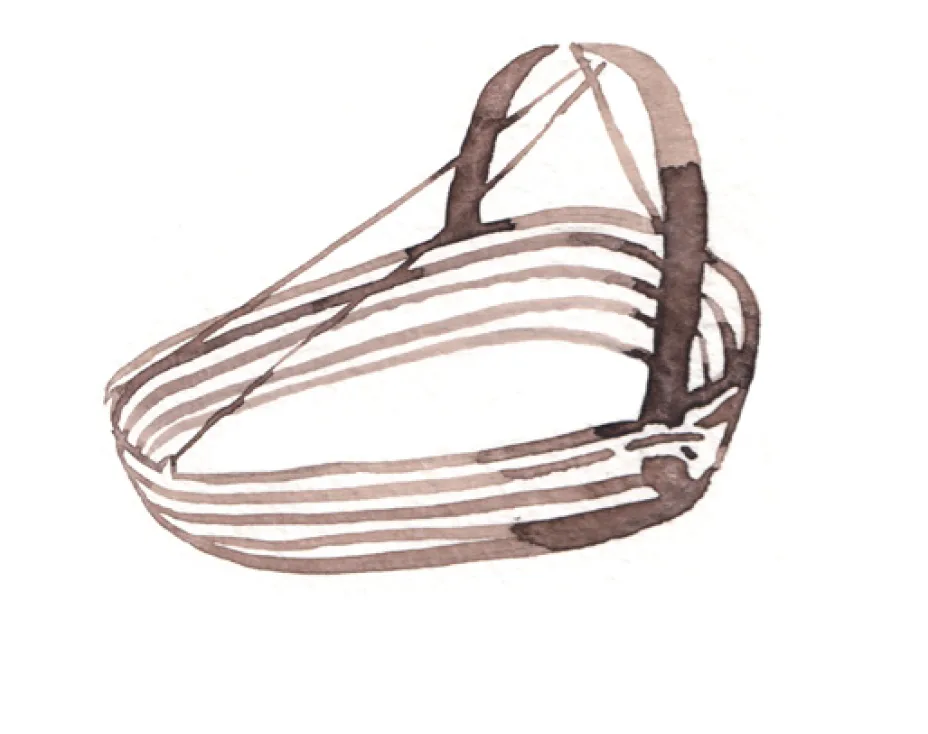
toyqɛtən (hoop over the χa:p̓ )
There is a hoop over the χa:p̓, called toyqɛtən. A blanket is often draped over the toyqɛtən, and this protects the baby from sun, wind, or other elements. The toyqɛtən represents Tla’amin self-governance, expressed through Tla’amin law, protocols, policies, and agreements that protect the Tla’amin qaymɩxʷ through providing overarching structure and guidance.
Tla’amin governing traditions are our protocols, laws, and processes of justice, rooted in our worldview. They provide us with guidance about how we can show up for ourselves and each other. They can be particularly helpful in finding our way through challenging experiences or encounters (such as conflict). They also help us advocate for our rights and know our responsibilities. Formalizing our governing traditions and protocols into our Constitution, laws, policies, and agreements is how we ensure consistent understanding and application of our ways and authority, and can serve to coordinate our law with those of other governments we work with.
The P’ah story, for instance, illustrates that ceremony and protocol are centrally important, as is knowing how to conduct oneself in a way that upholds protocol. This story also demonstrates that Tla’amin laws exist for a reason, and there are consequences if our behaviour disregards them. Learning and understanding this requires listening carefully, being still, being patient, and paying attention.
“It’s life’s lessons and teachings. How to behave when you’re growing up. But it’s told in animal stories, and it relates to us as human beings. All the animals, the birds, and bees, and bushes.”
We can bring Tla’amin law to life in how we carry ourselves and fulfill our responsibilities.
“Utilizing our own laws, getting away from colonial ways.”
“Our own laws should be top-standard when it comes to inclusivity.”
“The power of having reclaimed decision making after the Indian Act.”