Nation-to-Nation gathering with shíshálh Elders and Governance cements old bonds and creates new ones
By: Davis McKenzie
One hundred and fifteen Elders and community members from shíshálh, Klahoose, and Homalco gathered at Tla’amin Nation’s Ɂəms ʔayɛ Cultural Centre on November 26 to break bread, visit, and share information.
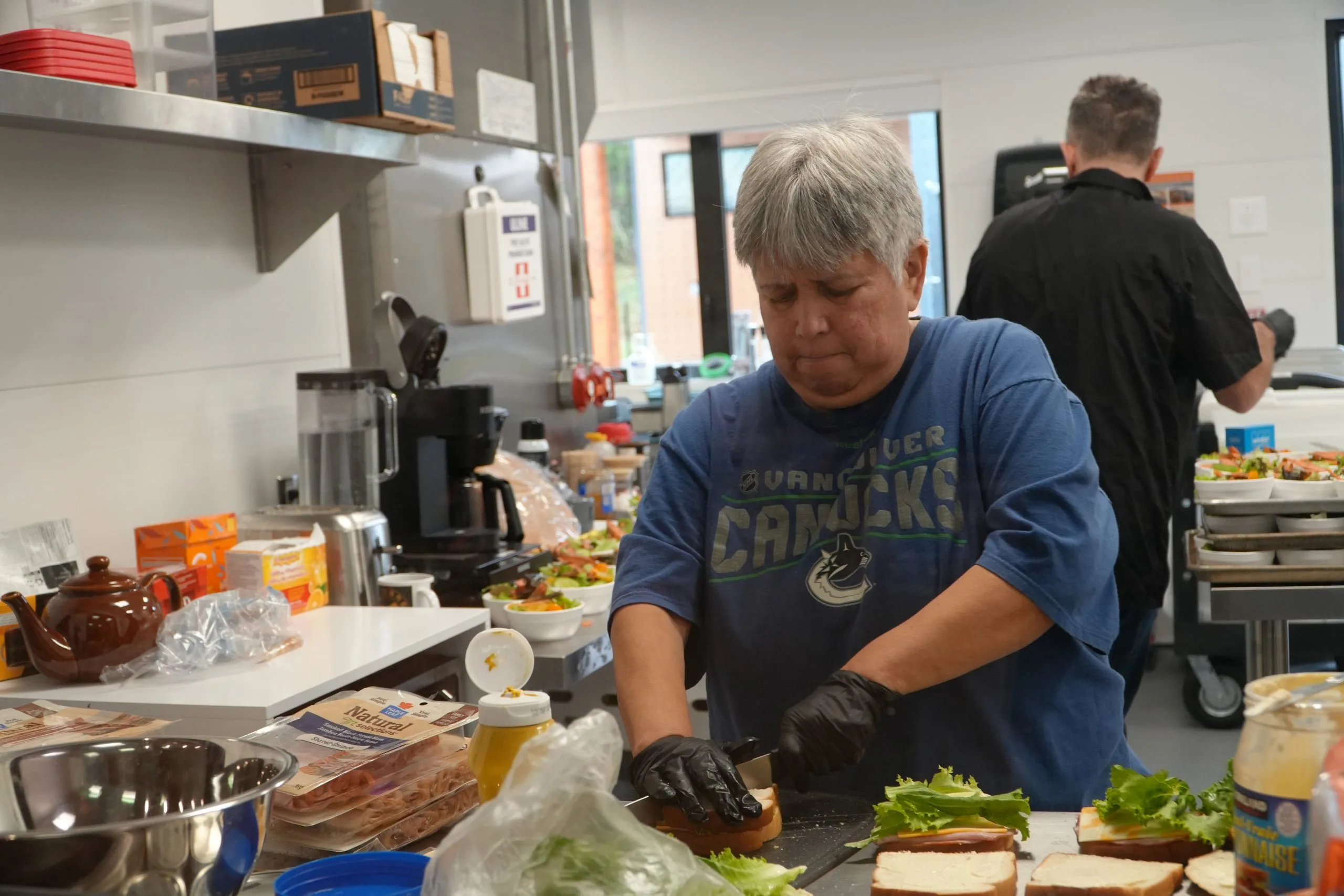
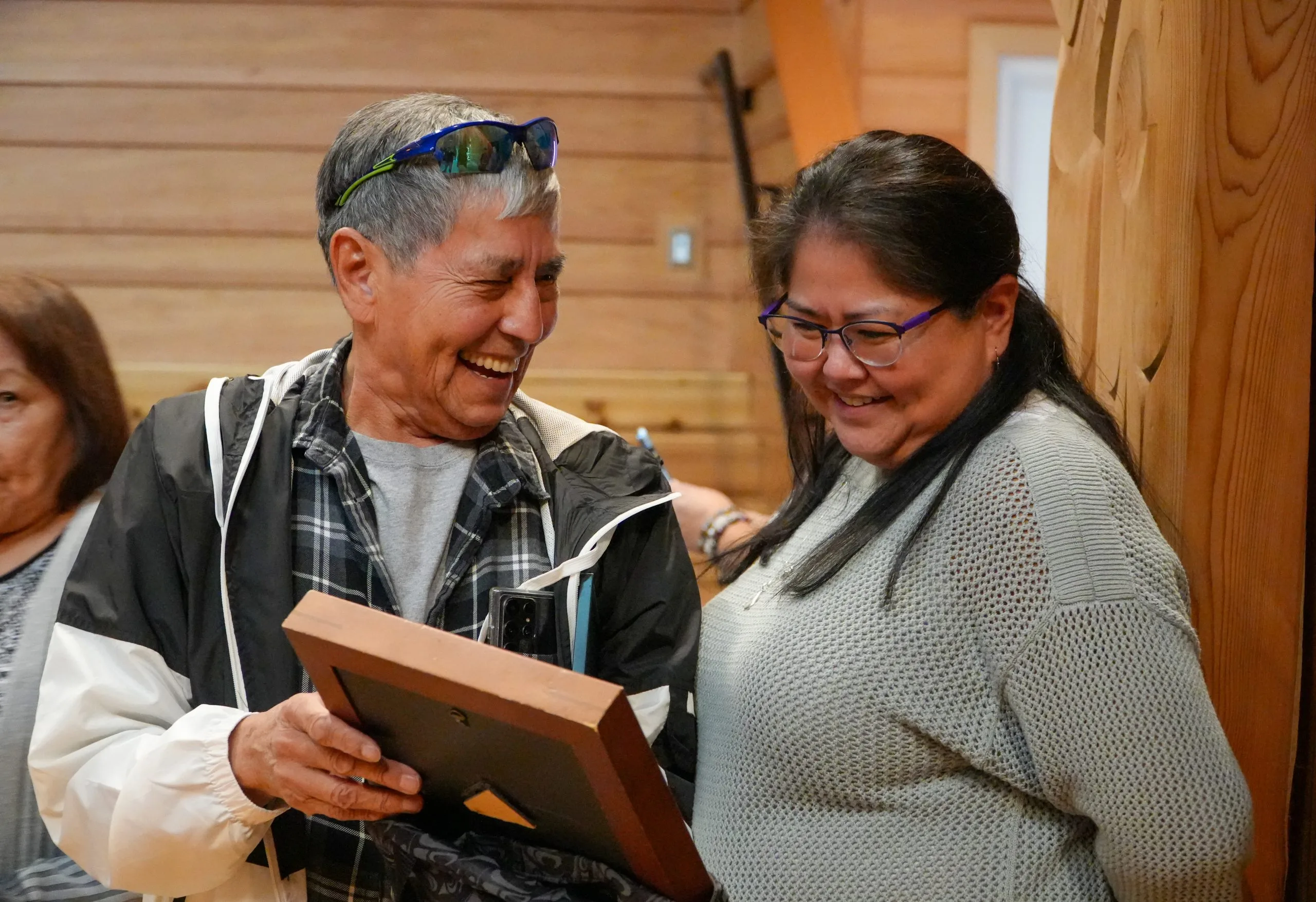
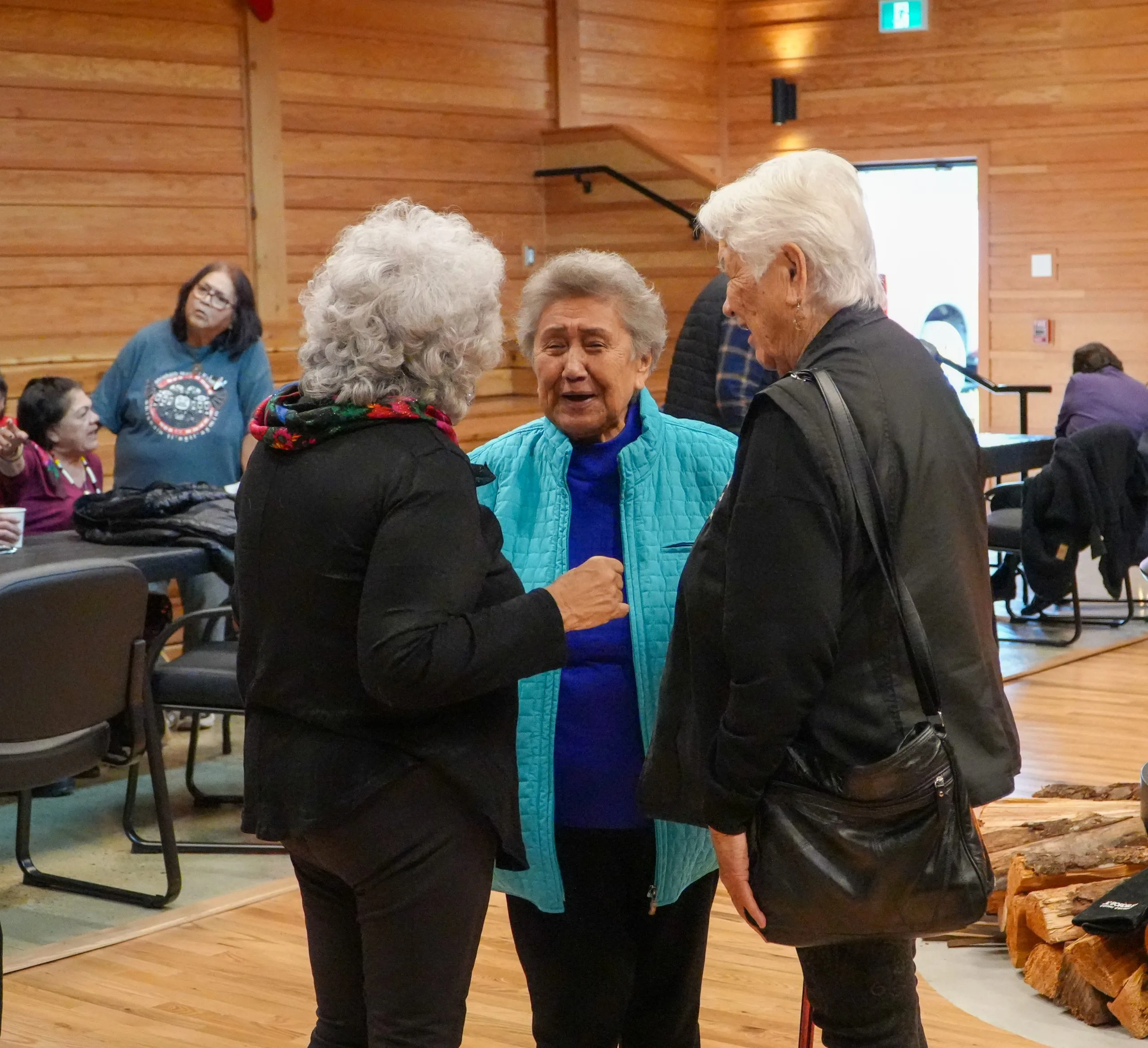
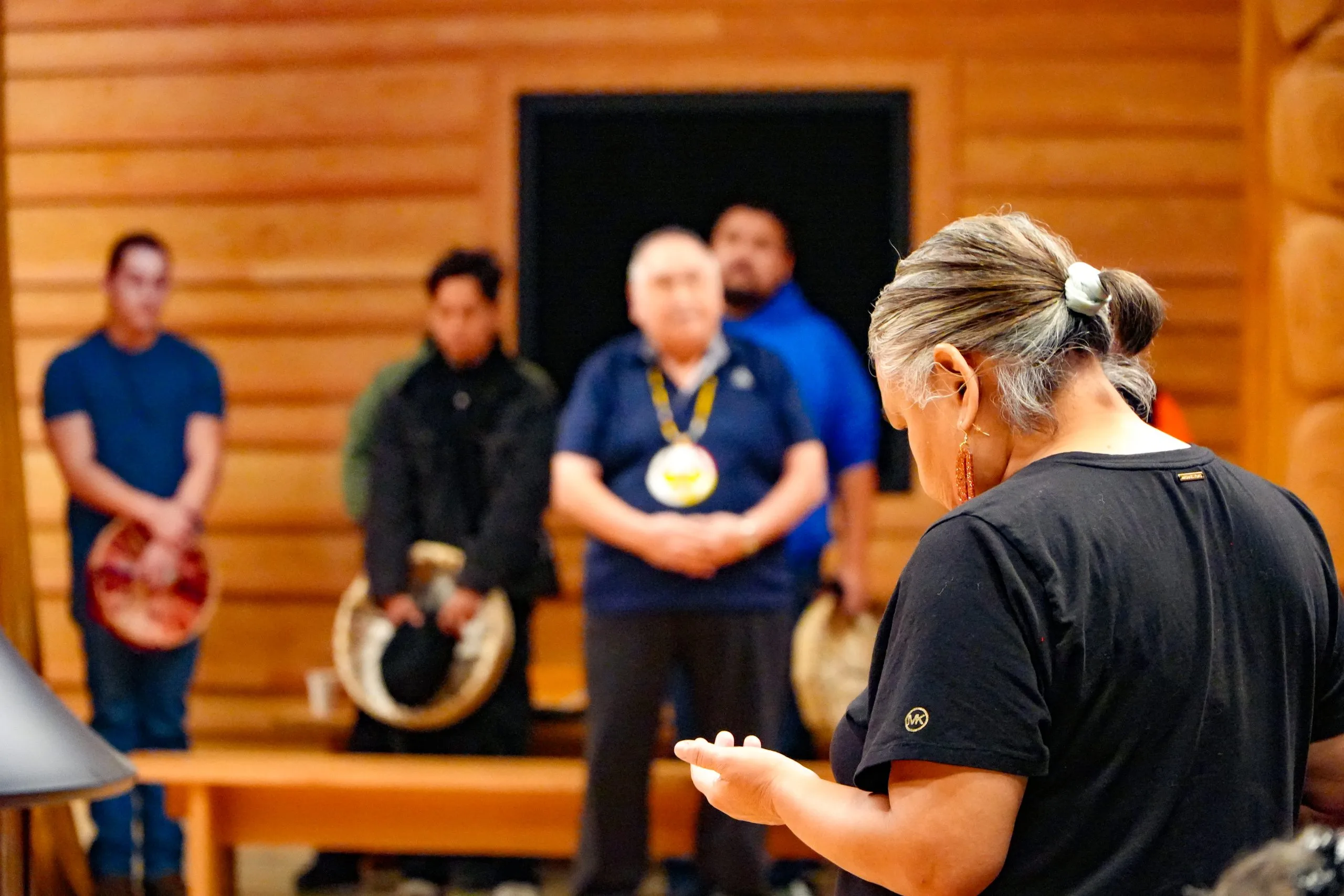
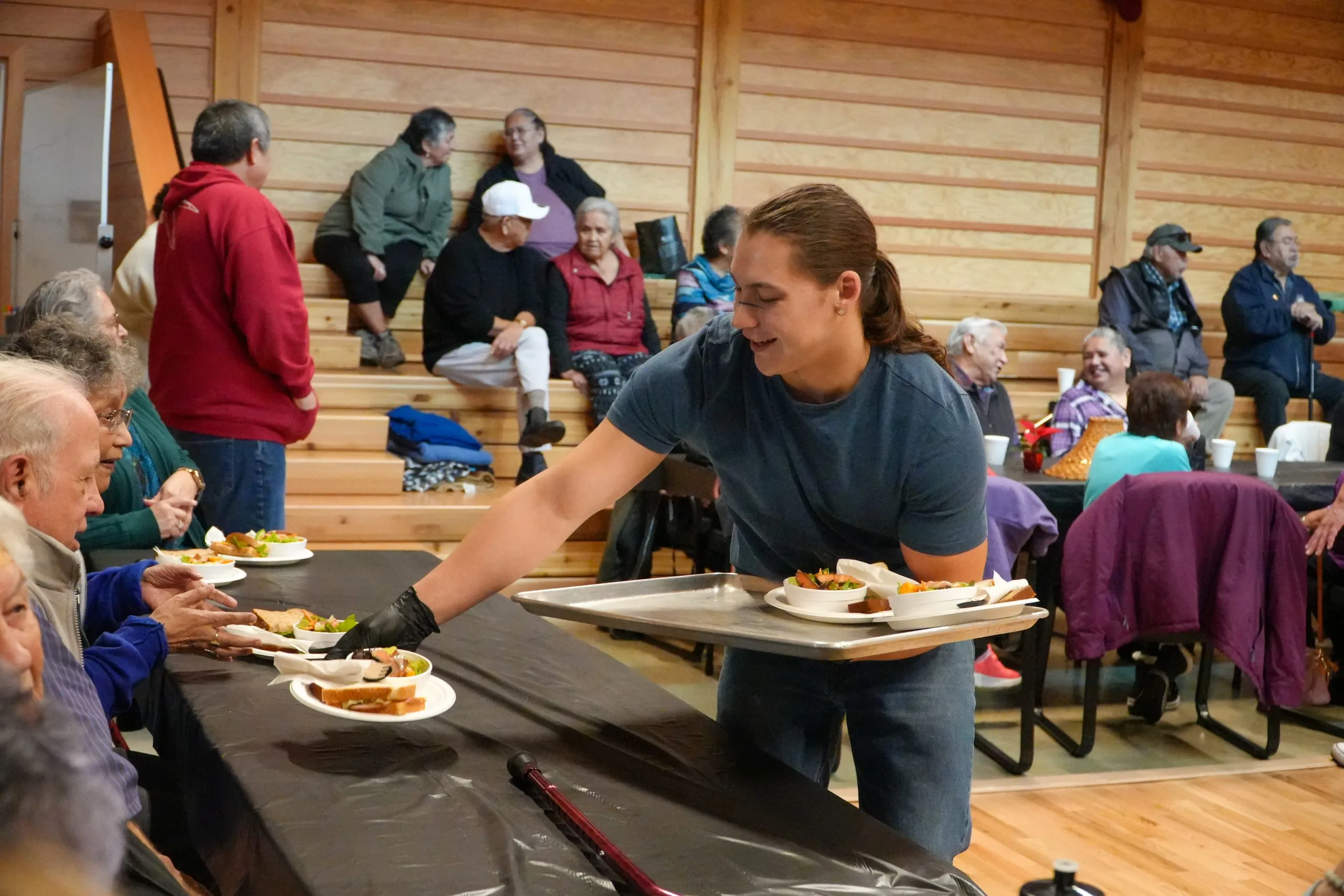
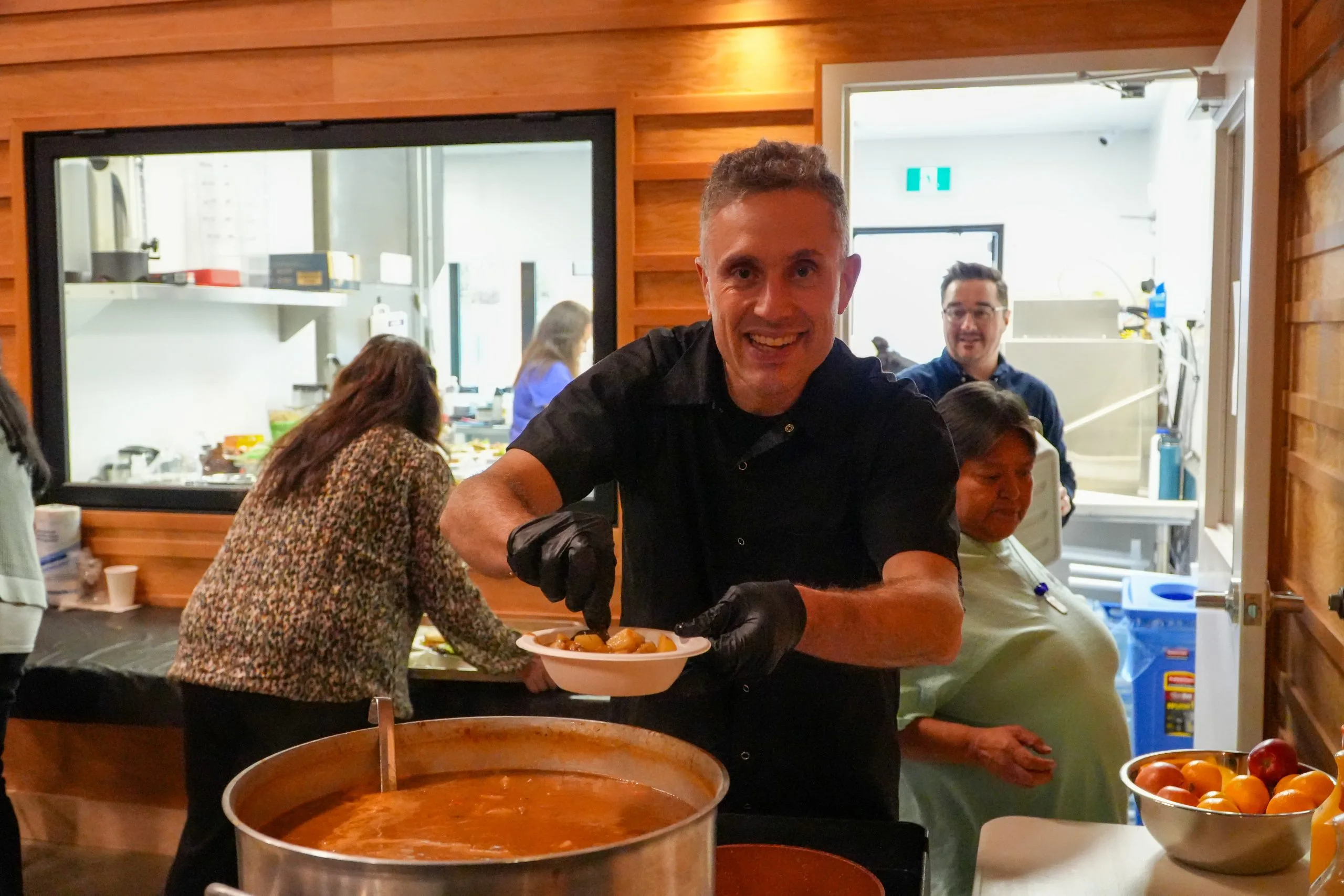
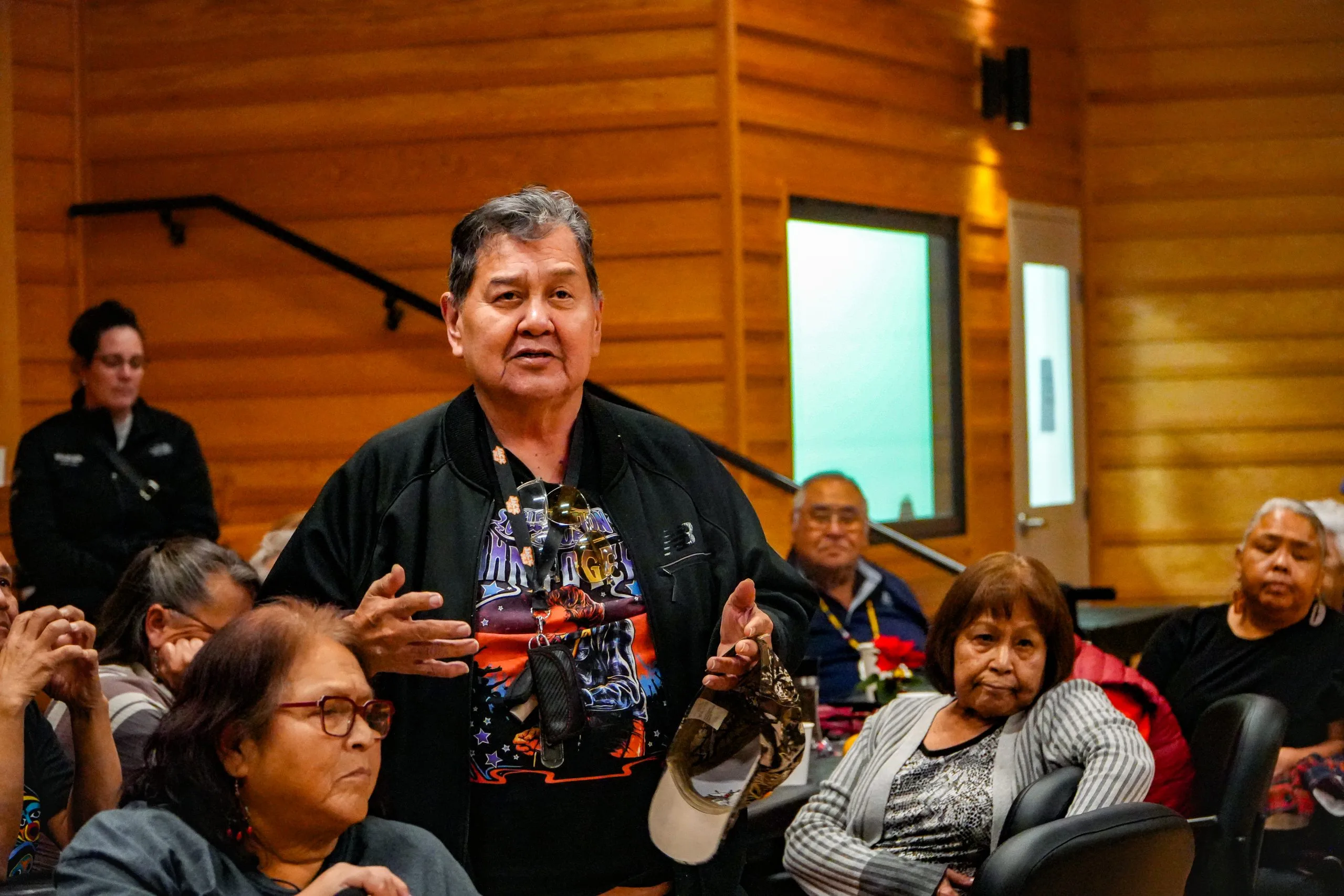
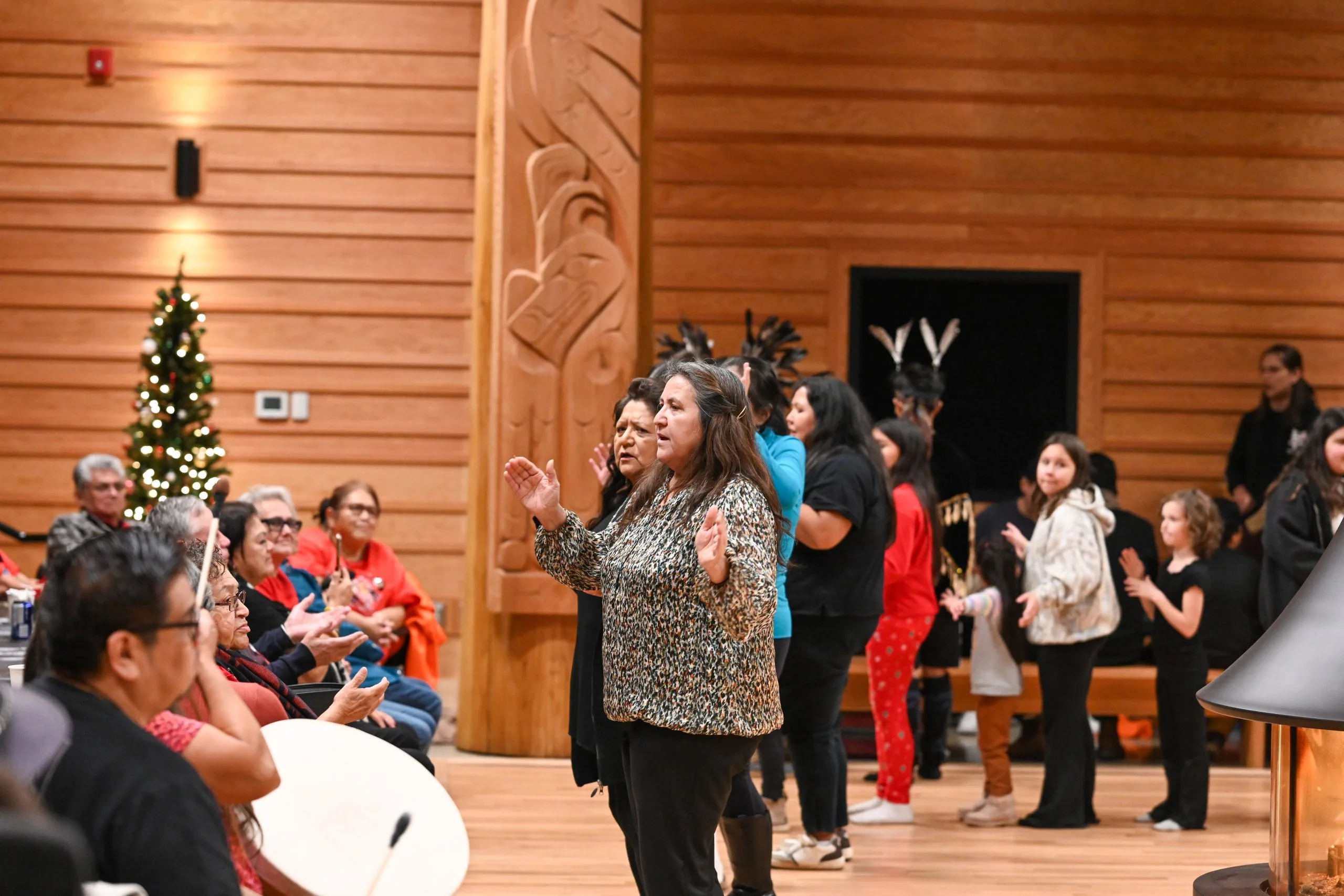
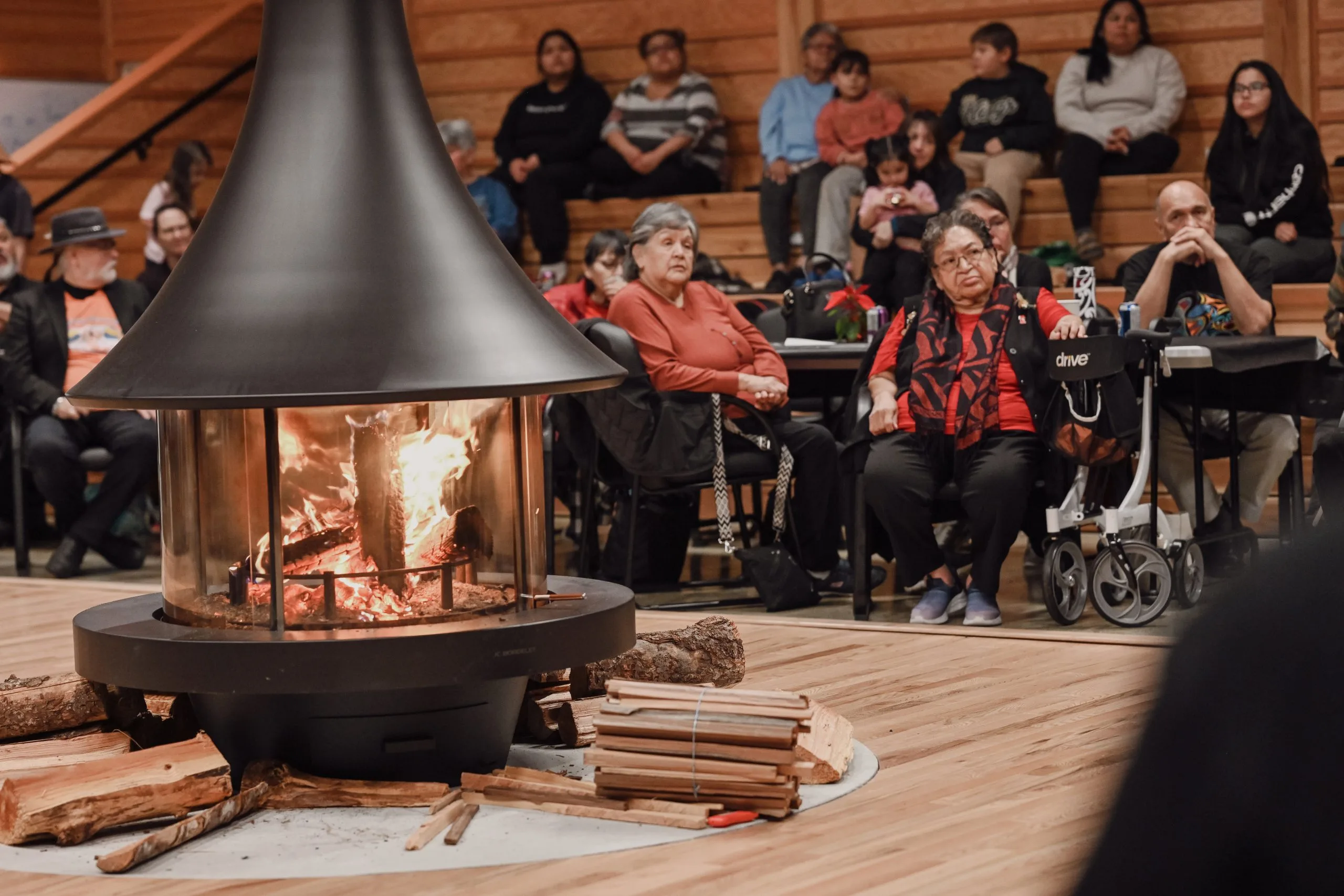
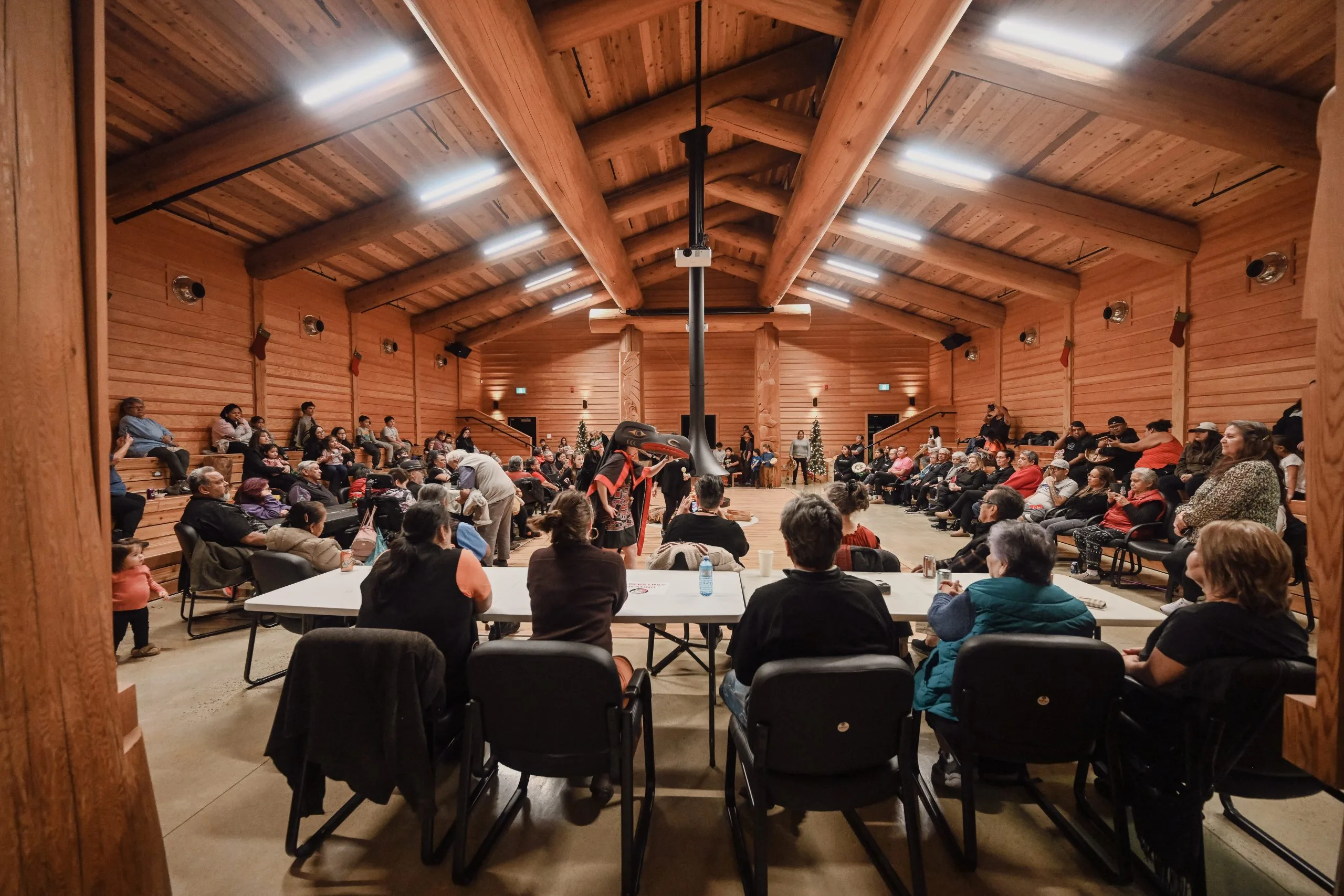
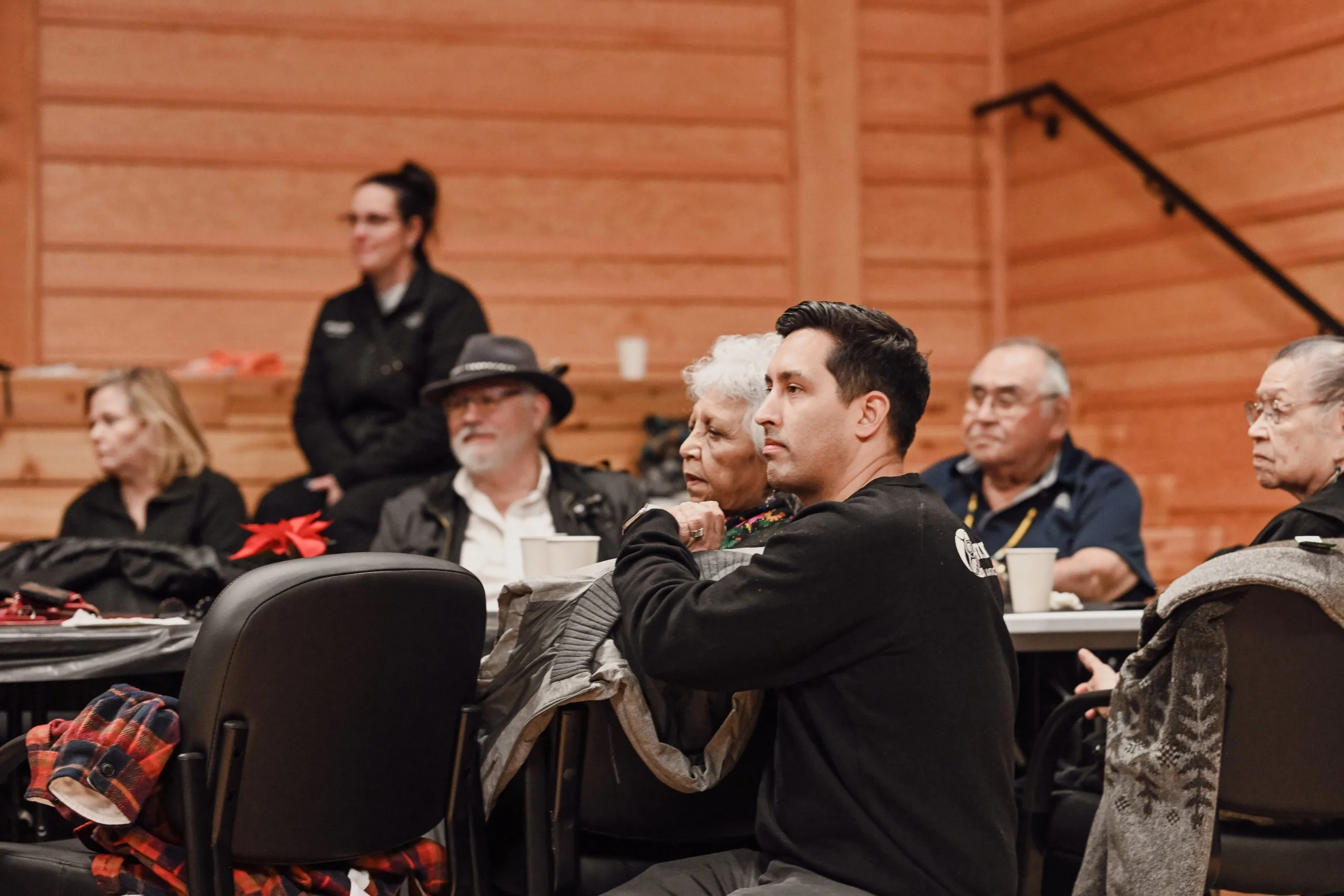
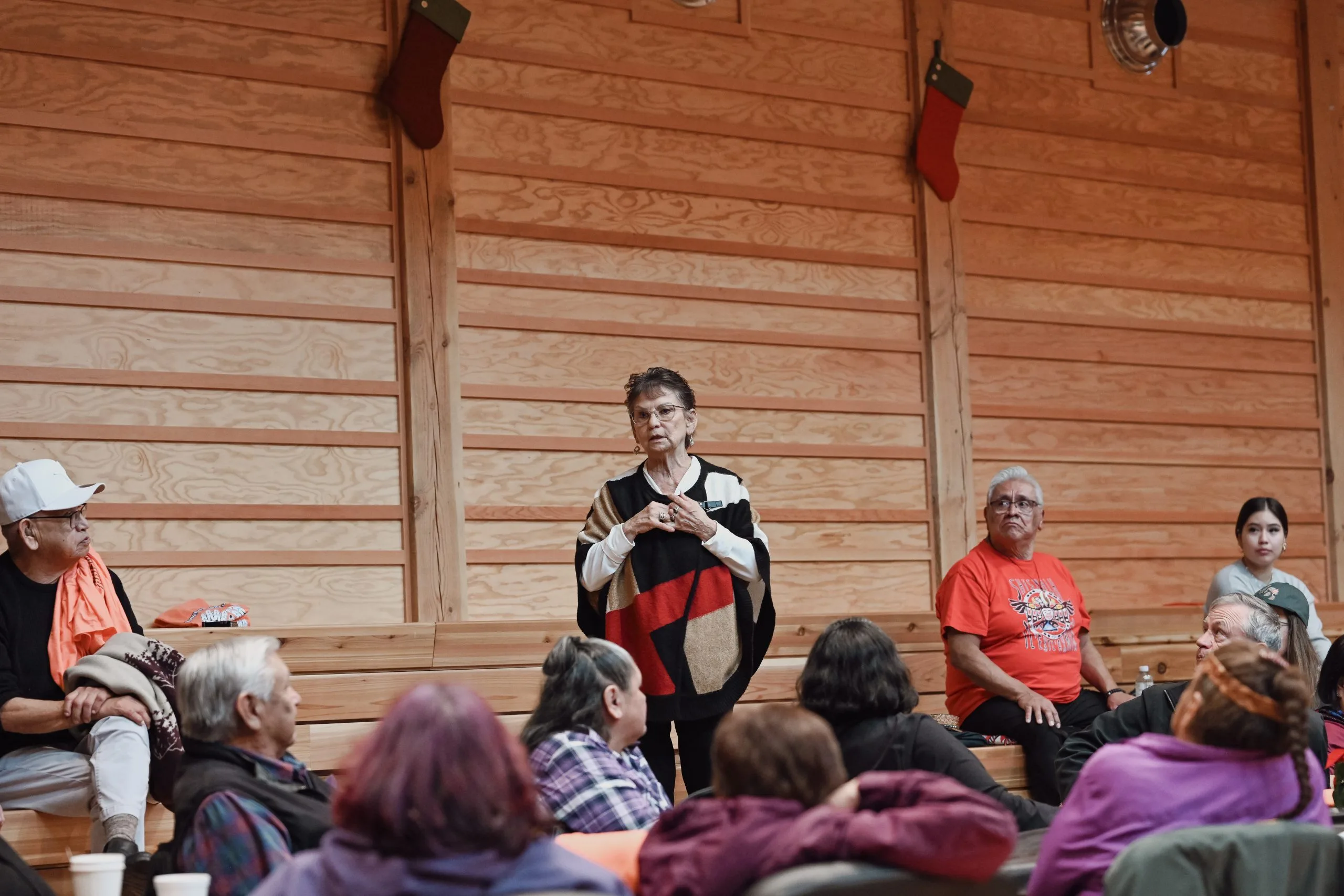
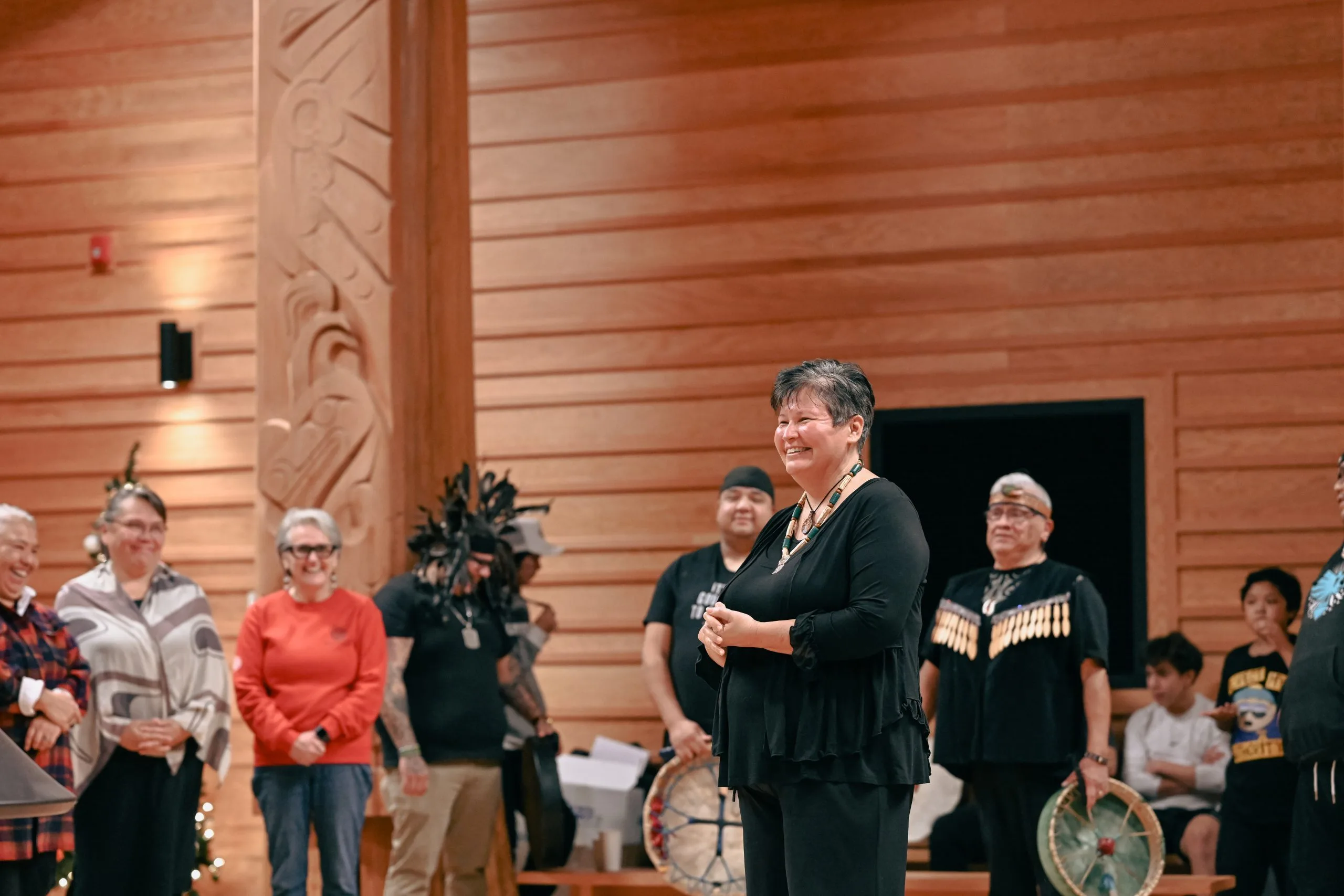
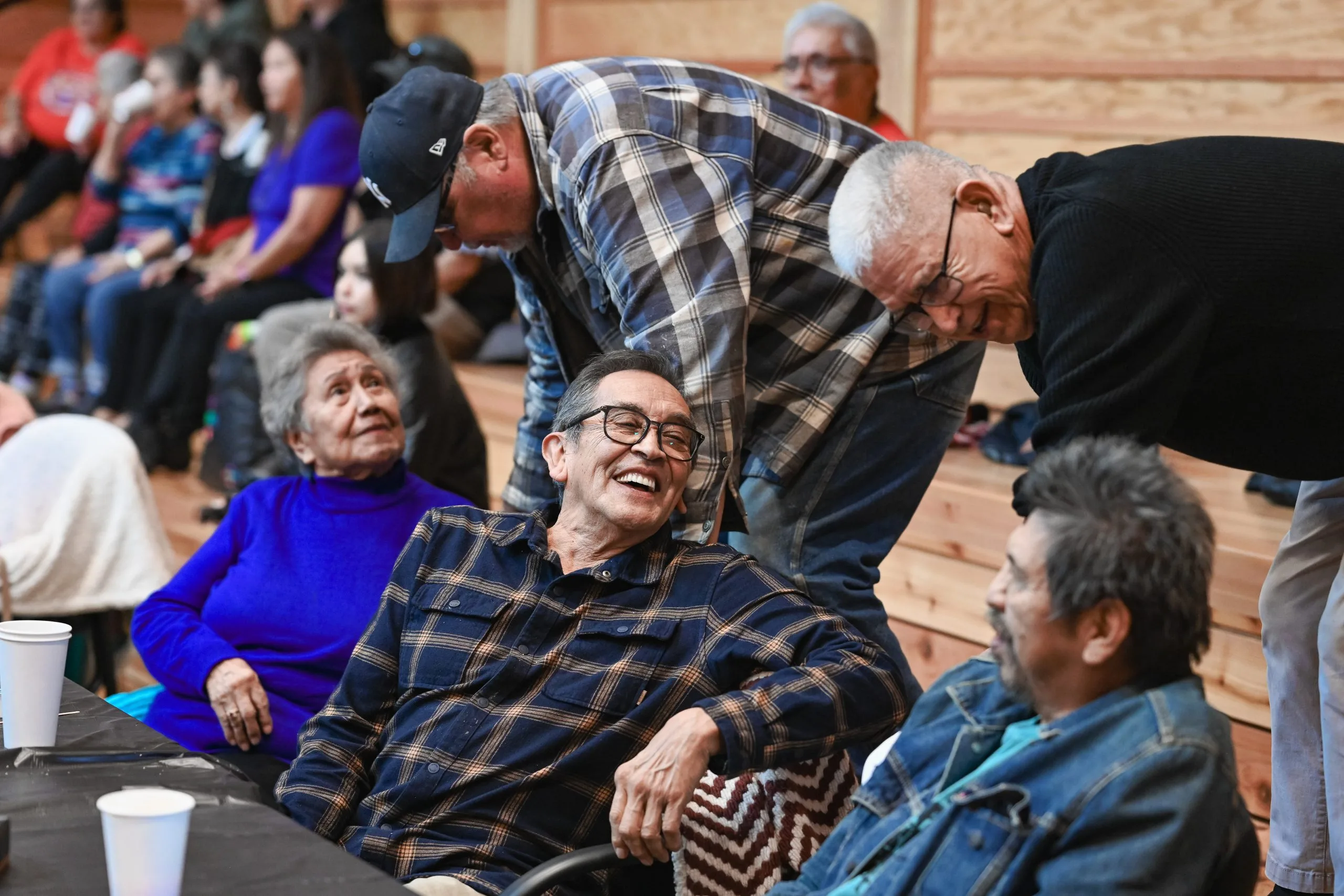
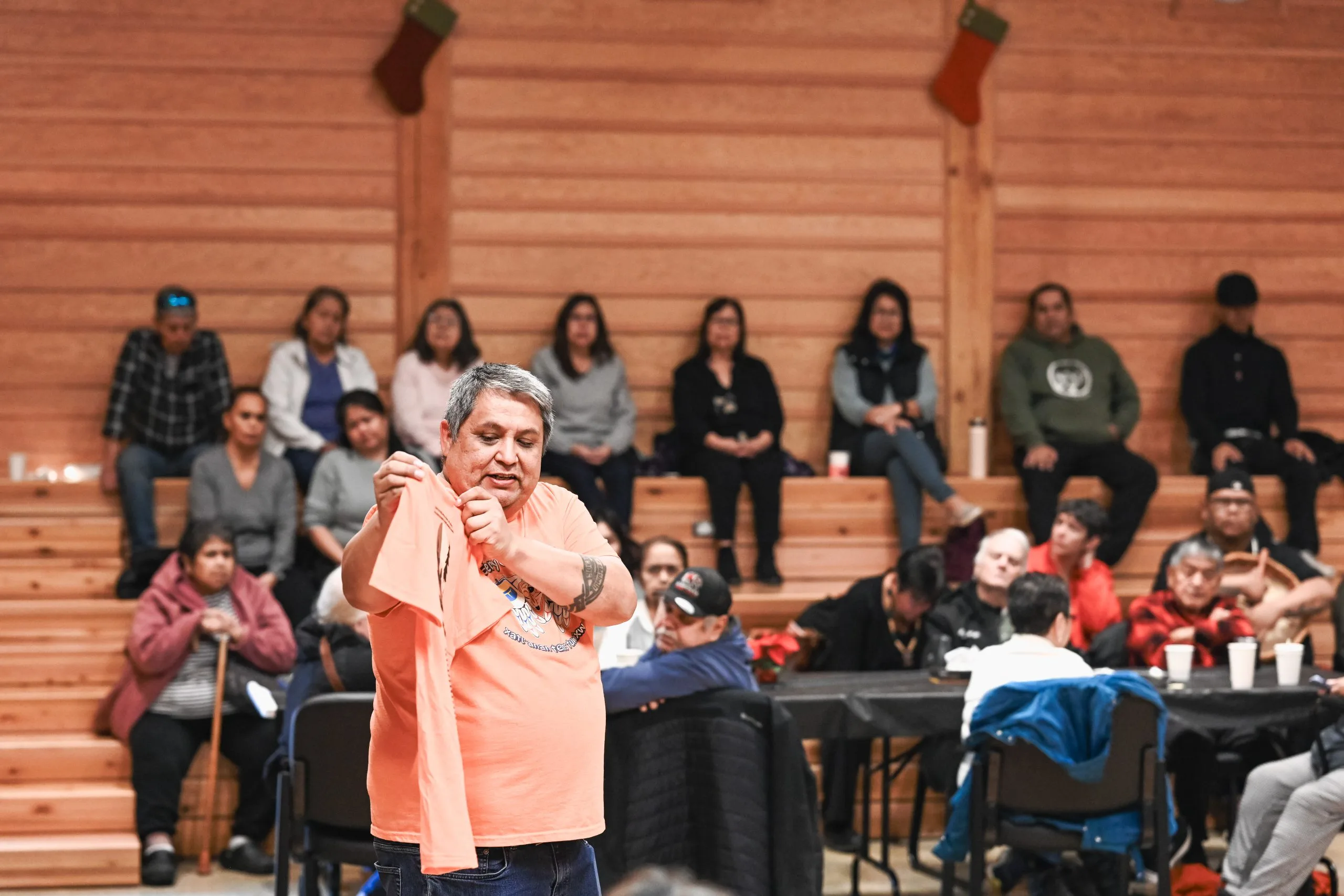
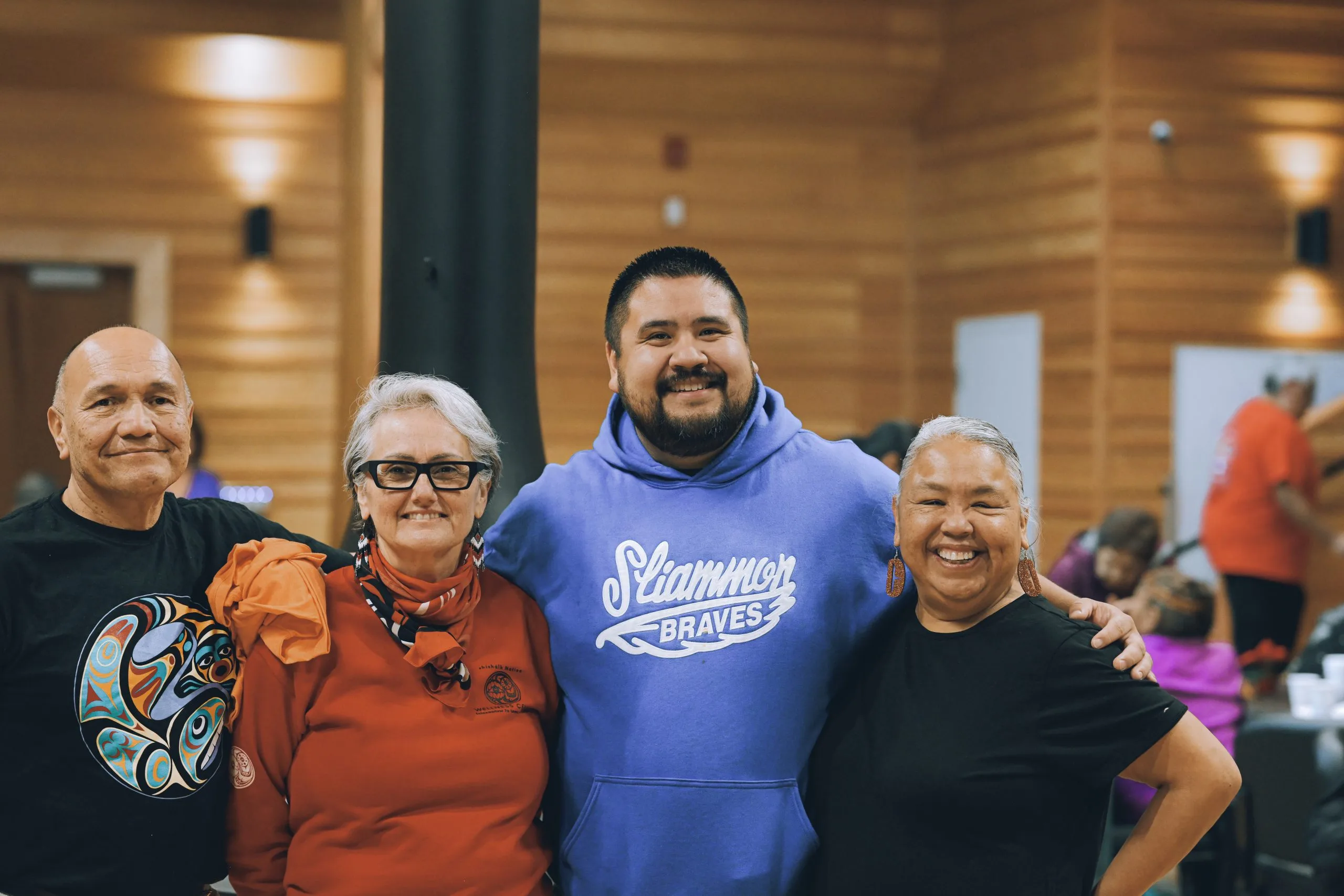
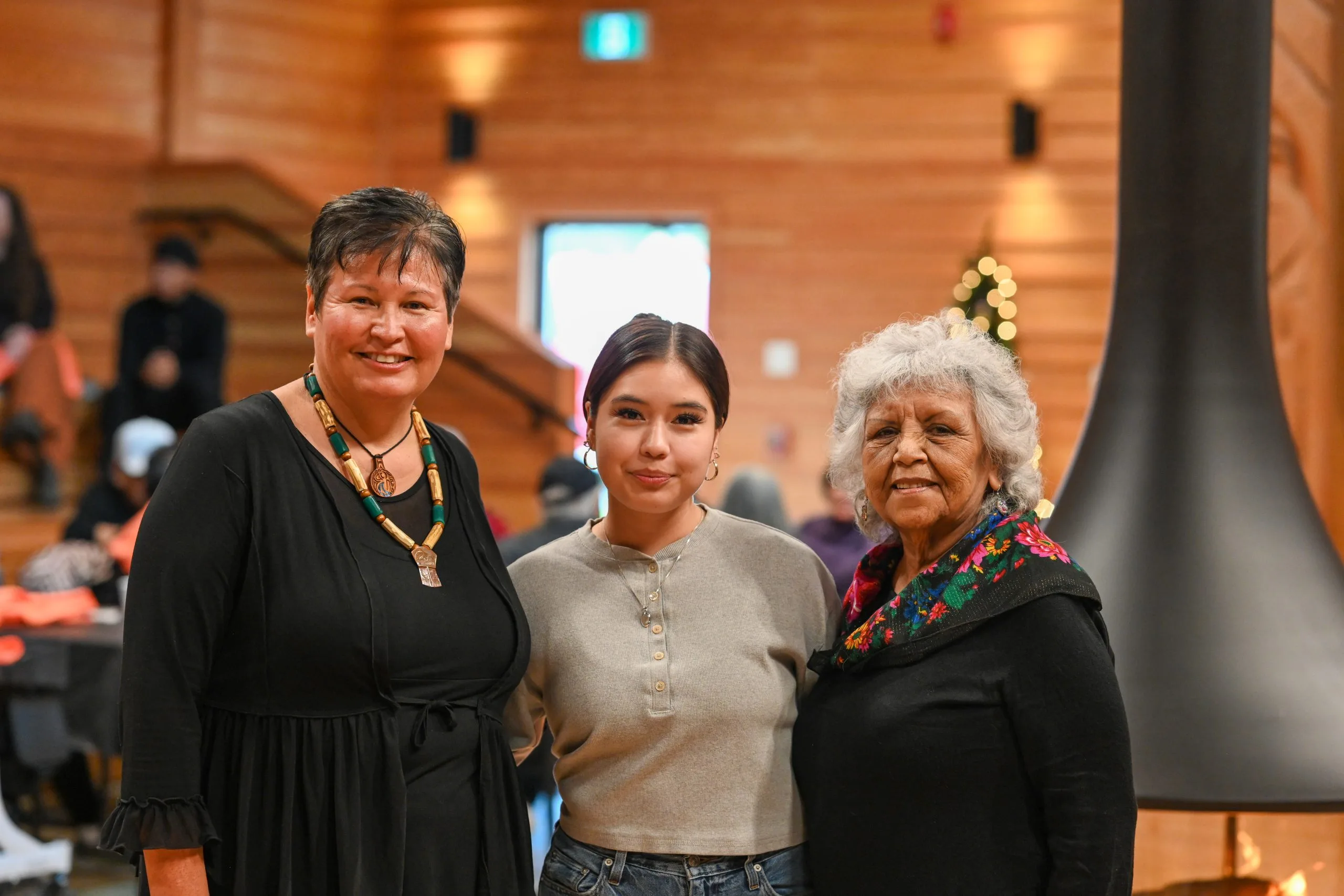
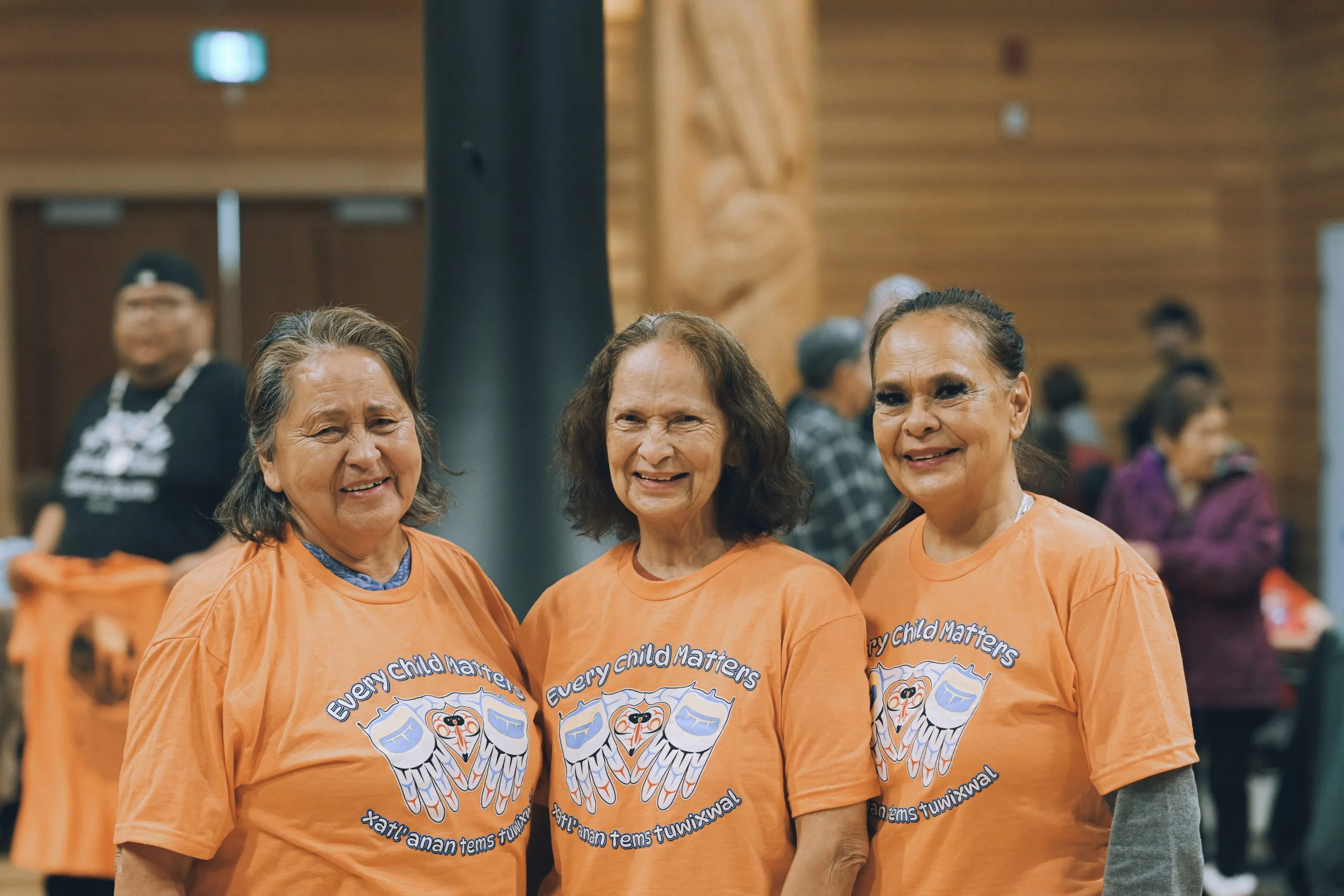
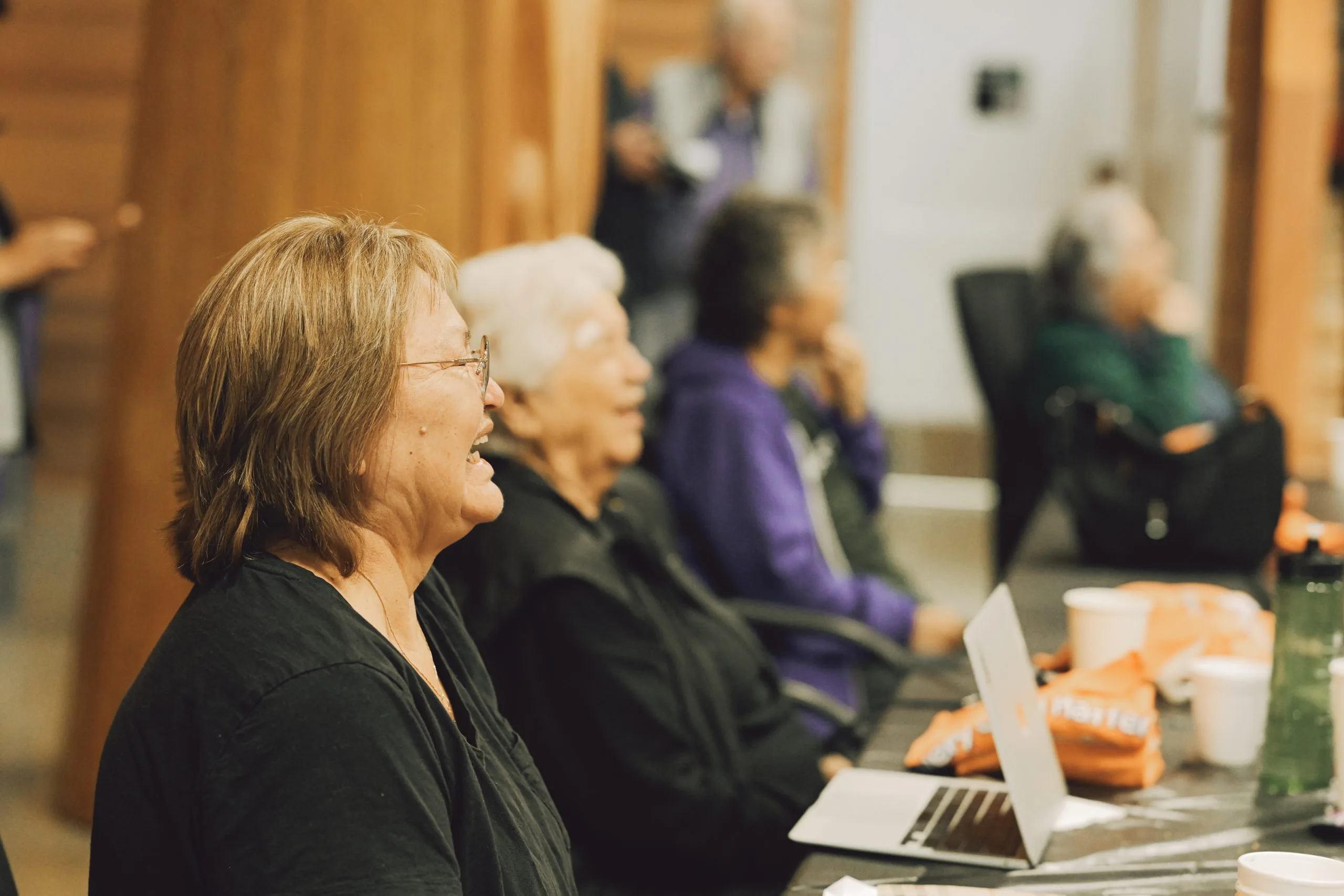
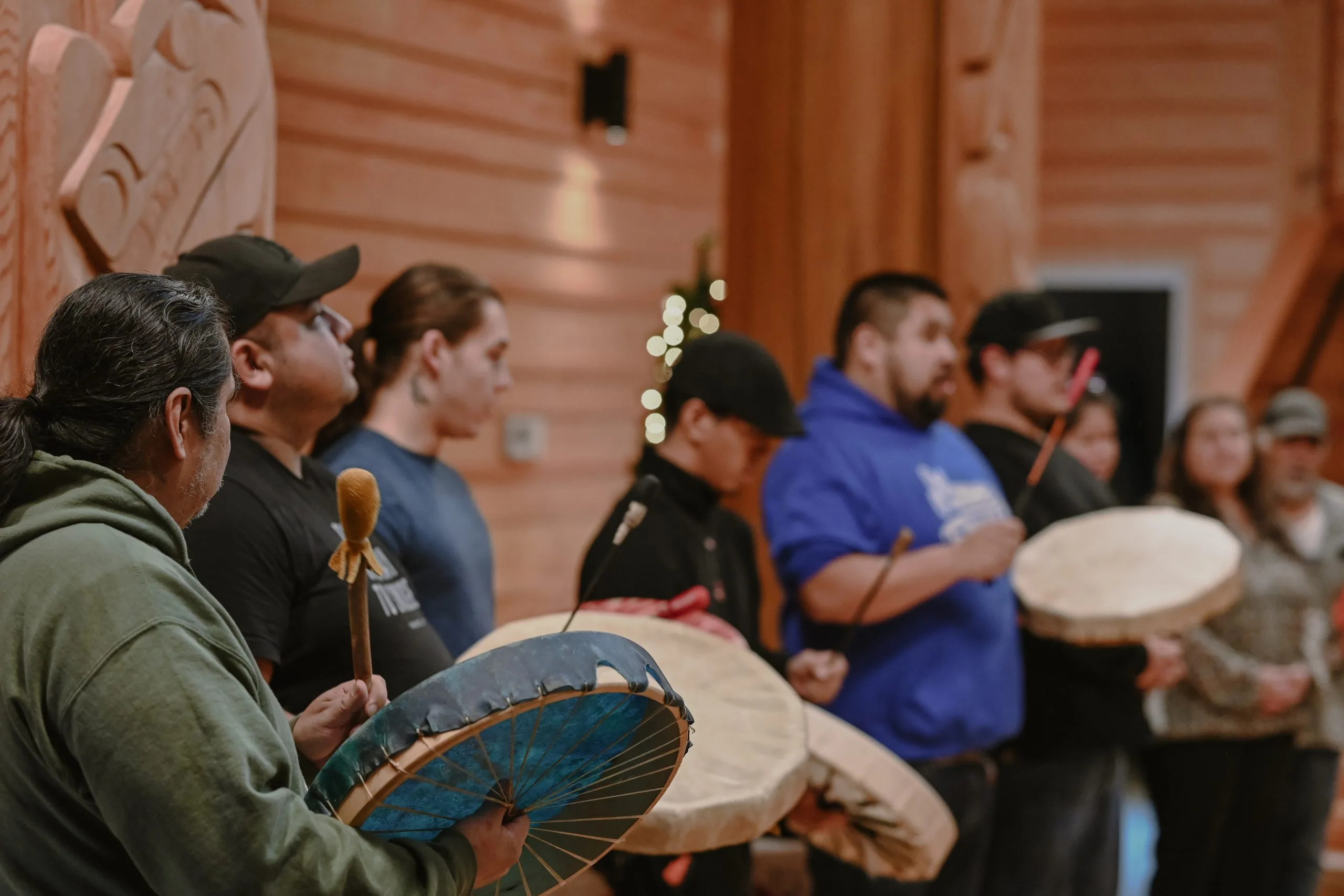
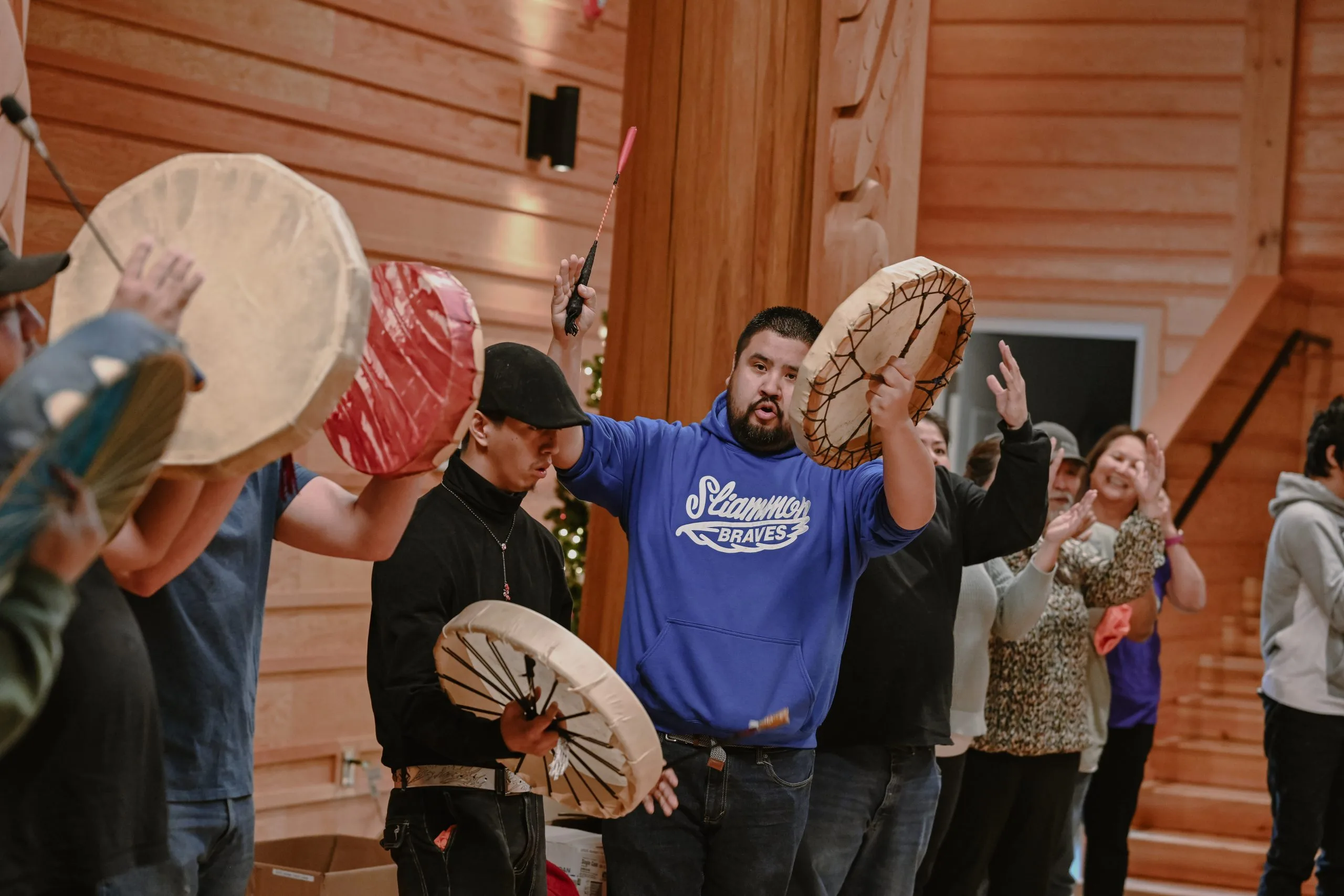
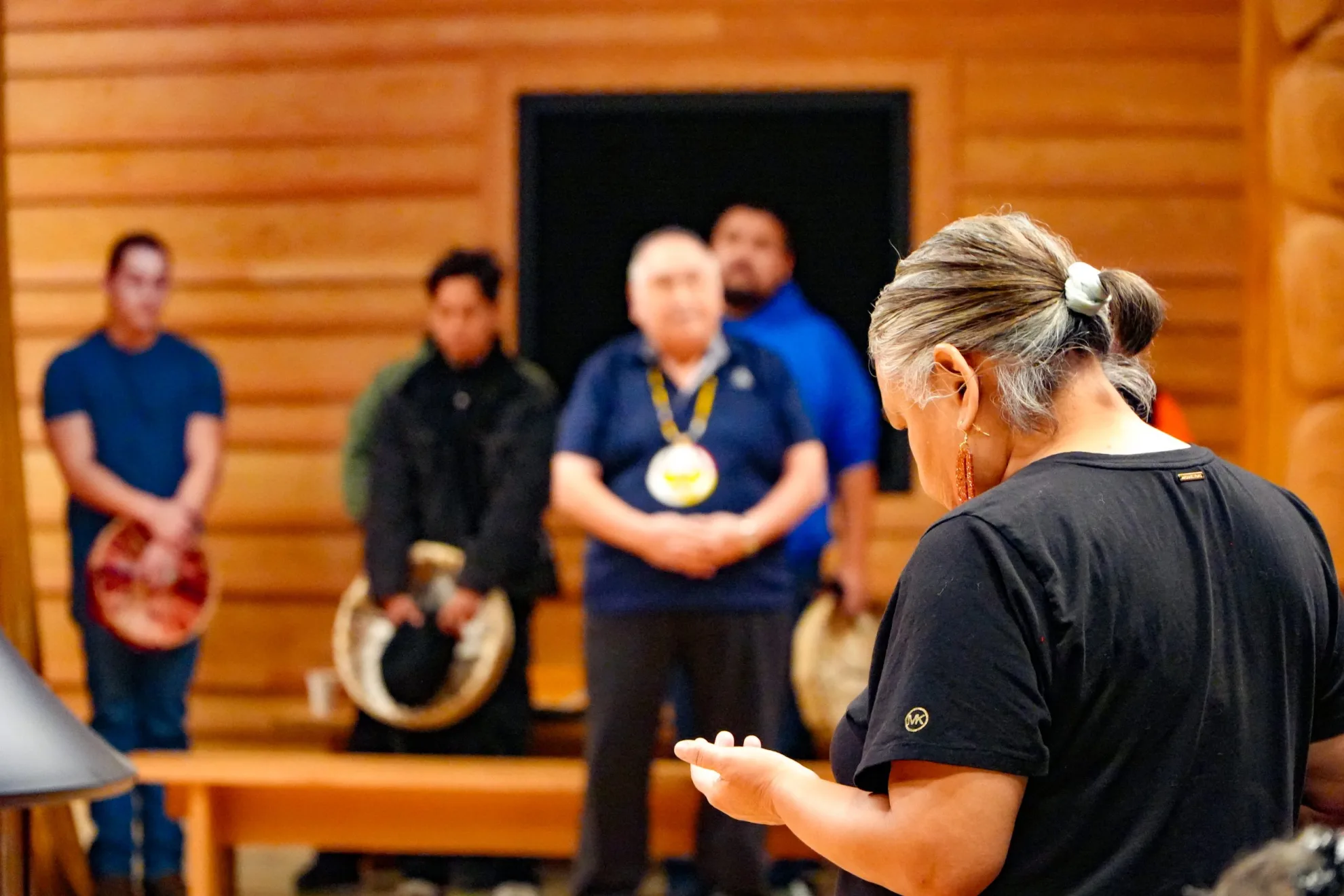
The group of 70 visitors arrived by bus, car, and water taxi from all directions and were welcomed with elk stew before getting into the day’s business. A warm and friendly buzz settled over the feast hall as Elders were reunited and ǰɛʔaǰɛ hugged, joked and reconnected.
Following protocol and welcoming, shíshálh Nation shared updates on their work to locate and care for the children who attended St. Augustine’s Indian Residential School and never made it home.
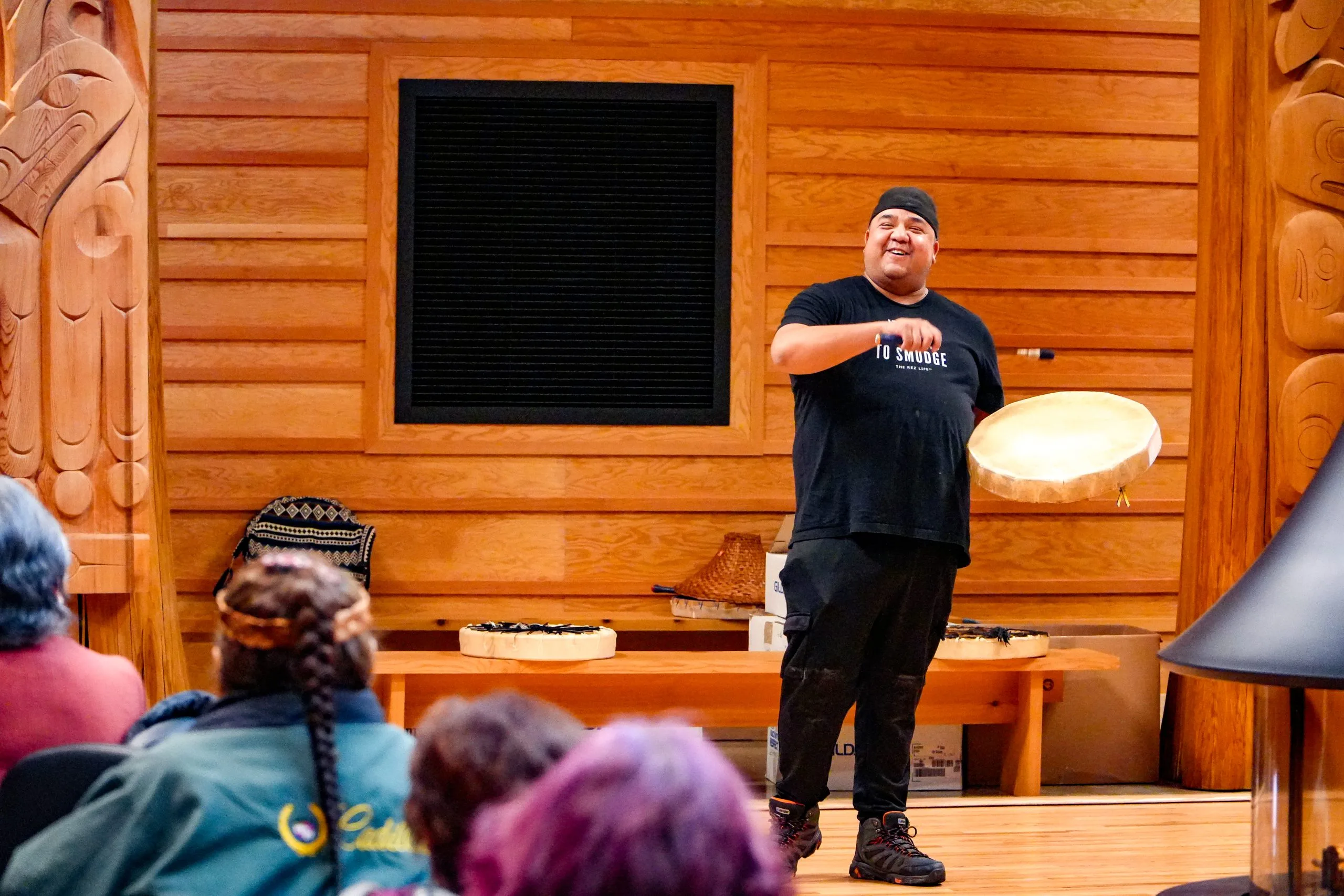
Shíshálh song catcher Alphonso Salinas “Sito” opened this part of the work with a journey song he composed for the children who never made it home from St. Augustine’s.
shíshálh Protector of Culture xwash Steven Feschuck then provided an update on the Nation’s ongoing work using ground-penetrating radar and other technologies. He explained shíshálh’s role as a “lead community”. Lead communities are those Nations where an Indian Residential School operated in their territory. Feschuck explained, “As a lead community we work with a network of government, and other lead communities to ensure that all of the Nations are involved in our process.”
Fifty-four different First Nations had children who attended St. Augustine’s, and Feschuck emphasized that as the research progressed, survivors would always receive results first. New locations were scanned during Phase II of ground penetrating radar work resulting in an additional 41 reflections of concern which warrant further investigation.
Feschuck also shared that, because of the atrocities at St. Augustine’s, some survivors do not wish to return to Sechelt. “Some never want to come back, and we understand that,” he said. “We are issuing you an open invitation to come do healing work. Our arms are open to all of the First Nations whose children attended St. Augustine’s. Shíshálh wants to support communities and survivors with healing in any way we can.”
Following the presentation, speakers from all Nations rose to thank shíshálh for the invitation and the updates.
Gladys Tom rose and thanked shíshálh for coming and the respectful way that they updated the sister Nations on this sensitive topic. “I’m a survivor and have thought that part of my spirit still resides at the school, I for one would welcome the healing you are offering,” said Tom.
To close, Tla’amin’s Drew Blaney offered the shíshálh love song, gifting it back to shíshálh to use whenever they wish. “Despite our history of fierce competition on and off the field, we do fall in love from time to time,” he joked. “This song tells the very old story of lovers — a man from here and a woman from shíshálh — whose union wasn’t allowed, and how their spirits wander to this day looking for each other.”
As the gathering wrapped up, Chief and Council made their way to government house to meet with Tla’amin leadership and Elders made their way to the ferries or lingered to visit. The air at Ɂəms ʔayɛ laced with love and gratitude for old and new connections.